
Part 1 Beyond the Brick Wall
“…ages come and pass, leaving memories that become legend. Legend fades to myth, and even myth is long forgotten….” by Robert Jordan – Wheel of Time
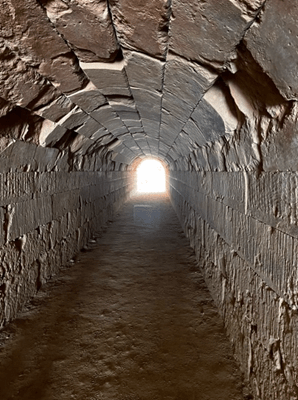
A peek beyond the wall
Where to begin? The easiest solution would be to begin at my earliest known ancestor. However, I am a curious person, therefore, I wanted to stretch and peek beyond my earliest ancestor (past the brick wall). Doing so has allowed me a richer understanding of my “heritage”.
Fortunately, DNA technology has advanced enough to allow me to glimpse at three distinct lines, my Paternal, my Maternal and my father’s maternal. My paternal was done by taking a yDNA test allowing me to trace my father’s, father’s father, and so on. The maternal lines do the same but use mtDNA which traces my mother’s, mother’s, mother, and so on. This of course leaves all other lines out, but a small glimpse is better than none. Part 1 of this book will focus on the Logan line, specifically from 234,000 BCE Africa to the ~1730 CE when David Logan left Ireland to become an American Colonist in Virginia.
If you are not directly related to my Logan Limb, you may still find interest here as several lines would have similar paths and a vast majority of the DNA I inherited from my Grandfather John indicates “English & Scottish” heritage[i]. Therefore, I am estimating that Peggy Gard’s heritage was at least 90% from England. As my yDNA group is the most common on the British Isles there is a good chance I am covering quite a few journeys of my ancestors mentioned in here.
As this is a Genealogy book, I will relate this part of the story at a high level and avoid getting technical. However, it would be helpful if I briefly familiarize you with yDNA testing and how it helped. the term Haplogroup. Only men have yDNA and therefore you can only get your yDNA from your father, who got it from his father and so on. Because of this yDNA does not mix like the rest of our nuclear DNA. This enables a predictable mutation rate allowing scientists to calculate common ancestors for groups of people. When our yDNA is identical, we form a very small group called a “subclade”. When there are small differences to our yDNA, we form a larger group that they call a “Haplogroup”. When there are even more differences, but still clearly part of a group then we have a “Super-Haplogroup”. I am in Super-Haplogroup “R”, Haplogroup R1B and the sub-clade R-L21 who entered the British Isles [1].
Now, I would like to welcome you to join me on a journey across time and around the world as we discover who our ancestors are and how they lived. Without further ado, let me introduce you to David Logan and his wife Jane McKinley.
[1] Note, this can be broken down even further to give you even closer relatives.
[i] From my Autosomal DNA test on Ancestry.com
 Becoming Us