

Becoming Logan and Gard
Chapter Eight: Becoming Elizabeth Jackson
Colonial Virginia 1625 – 1780
Brockmans: Samuel, Samuel, John and Stephen Brockman; Rebecca Graves
Embree: John, Joseph, Elizabeth and Mary Embree; Frances Woolfolk
Jacksons: Congrave, James, Caleb, and Elizabeth Jackson
Bush: John jr., John sr. and Abraham Bush
Burris: Thomas and Mildred Burris
Coming to the Chesapeake
Like her husband, Daniel Logan, Elizabeth Jackson’s ancestors moved from Virginia to Kentucky and finally into Missouri. However, they did not have the same experiences as the David Logan did. Most notably, in Virginia, Elizabeth’s ancestors settled in the eastern Virginia Colony, which unlike the Shenandoah Valley’s Scott-Irish settlers, was settled by the English. Specifically, they were either Royalists who supported King Charles during the English Civil War (1642-51) or a much lower class coming over as Indentured Servants.
During the English Civil War, King Charles failed in his attempt at absolute rule and was executed and left his supports feeling insecure.[i] As a result, the Colony of Virginia became attractive especially if you were a younger sons of the Royalist families who were not in line to inherit the family’s lands and fortune.[ii] In addition, for those lacking the means to own land the Virginial colony offered a path through indenture.
Despite arriving in the 1600s, Elizabeth’s ancestors came to a well-established colony that was far from the frontier. It was founded in 1607 when three ships, the Susan Constant, the Godspeed and the Discovery arrived in what is now Jamestown, Virginia (named after King James the First). This first ever settlement, faced disease, famine, and interactions with the Powhatan tribe.[iii] Somehow, they managed to survive and over time Virginia became one of the richest settlements in the “New World”.

This wealth came thanks to the ability to grow tobacco which led to the importation of Indentured Servants in the 1600s and African slaves in the 1700s.[i] Over time Virginia began to coalesce around a small set of ruling families, referred to as “the first families”.[ii] These families included the Carters, Morrisons, Harrisons, Masons, Madisons, and Washingtons, among others. To demonstrate the power they held, of the 152 Virginians who held top office in the last half of 17th century, 16 were from aristocratic families, 101 were sons of barons, knights and gentry, 7 held arms in the college of heraldry, leaving only 18 from the middle class.[iii] Like in England, these families intermarried creating a web of kinship and a leadership class that was very difficult to break into. In 1724 there were 12 members of the Virginia Royal Council, and all were related to each other either by blood or marriage.[iv] Their living conditions were an upgrade from the Shenandoah valley as well. They lived in Great Houses which were 1.5 to 2 stories high providing much more comfort than the Log Cabins that the Ulster Scots would build further west.[v]
Virginia was also a very patriarchal society where, if a man is killed by his wife, son or servant it was considered treason, not just murder. On the other hand, the punishment for the murder of one’s wife, would typically be a symbolic brand (no burning involved). The Virginia courts took a similar approach to rape which led to sexual predation, especially when it came to Servants and Slaves. Bringing this to light, we turn to an account by Mary Boykin Chesnutt, “Like the patriarchs of old, our men live in one house with their wife and concubines and the Mulato one sees in every family exactly resembles the white children and every Lady tells you who is the father of every Mulato children in everybody’s household, but those in their own they seem to think they dropped from the clouds.”[vi]
It is here where Elizabeth Jackson’s 4th great grandfather, Abraham Bush arrived by 1657[1] as an Indentured Servant to Thomas Powell[vii] who paid for his transportation in exchange for a headright. A headright would grant Thomas 50 acres of land for each servant he brought to the colony. In this case it was four, Abraham Bush, George Spencer, Peter Elmore and Sara Bannister.
Other than a possible birthdate near 1620,[viii] Abraham’s life prior to this is shrouded in mystery, but like others in his situation he was likely born in England. He was likely a criminal, or a lower middle-class worker hoping to get land in the future. No matter his station in England, he occupied the lowest rung on the social ladder in Virginia.[ix]
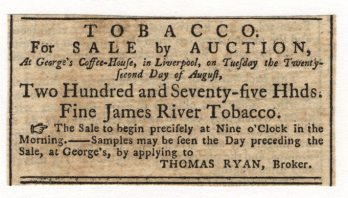
All of this was made possible by Tabacco which while lucrative, required a lot of land and labor. Early on, farmers were ignoring this fact resulting in soil depletion around Jamestown. As a result, the General Assembly passed a law in 1632 reducing the number of plants each settler could grow to 1500. As a result, they expanded in search of fresh lands bringing them to what would become Lancaster County in 1651.[x] Lying just north of the Rappahannock River and west of the Chesapeake Bay this coastal plan provided great soil for Tabacco.[xi]
Getting the land was just the first challenge. To get the final product, first Abraham would need to plant the seeds in beds and when ready, transplant them to a hill (one per hill). The hill needed to be kept clear of weeds, while the plant would need to be kept free worms and other pests by picking them off manually. When it was time to harvest, each leaf would be cut individually, attached to stakes and hung in the tobacco barn. Curing requires time and very careful inspection. When done Abraham would sort, bundle and pack into barrels. During this time Abraham would have been expected to manage 6,000 to 10,000 hills.[xii] All of this in harsh conditions causing stress and disease.[xiii]
Despite all these challenges, Abraham survived his servitude and by 1662 was a free man appearing on the tax rolls.[xiv] Even more surprising he seemed to come out of it in good shape and in 1663 he purchased 200 acres of land from Richard Merryman in Lancaster County.[xv] With the land came the need for assistance and in 1664 Abraham and another former Indentured Servant, Peter Elmore were granted 300 acres via a headright “on the north side of Lancaster County” for transporting 6 people to the Virginia Colony.[xvi]
Around that time, he married first wife, Martha. It is likely her name was Wingate as in 1669 John Wingate “did by his last will nuncupative give unto Martha, the wife of Abraham Bush, his whole Estate”.[xvii] Unfortunately, Martha only appears in this and a land record which prevents us from knowing when Abraham got remarried to the widow Ann Alexander.[xviii]
Thanks to the wills of Abraham Bush and his second wife Ann, we can piece together who was born to whom.[xix] In Ann’s will, she names her children, Charity, Elizabeth, Isaac, and Jacob. However, in Abraham’s will, he names his children as follows, “Sonne Isack, Sonne Goerge Bush, Sonne Abraham Bush, Sonne John Bush, Sonne Thomas Bush, Daughter Charity Bush, Daughter Elizabeth Bush.” This indicates that at least his sons George, Abraham, and Thomas were born to Martha. Jacob is a bigger mystery as he does not appear in Abraham’s will. The most likely reason was that he was born after Abraham died making John Martha’s son and Jacob Ann’s.
In 1671, Abraham appeared in Court to announce his intention to travel back to England. A reason was not given but given that he declared it with Mark Grayne who was witness to his land sale in 1668,[xx] they probably were going together on business.
In 1680 Abraham became exempt from paying taxes due to “the saide Bush being upwards of Sixty years of age and having a greate Charte to maintaine & noe Servant to worke for him”.[xxi] Seven years later Abraham passed leaving his wife Ann and 7 children who survived him (plus maybe Jacob who was about to be born). He left “unto my loving wife, An Bush, this Plantacon I now live on and the Neck of Land thereto belonging for her life time and after her decease It fall ontu my youngest Sonne Isack.”[2] In addition he left an addition 75 acres each to his sons Abraham, George and John. Thomas received “one neck of land commonly called Peumen Neck” though we don’t know the size of that land. In addition to land, John got the cow called “Mad Braines”, which provides a bit of foreshadowing.[xxii]
One item that has caused some confusion is when he states that his sons Abraham, George and John should “work for his mother three years then he shall be himself.” This has led many to conclude that they went to live with their birth mother, Martha. However, this is very unlikely as the Virginia Colony in the17th century did not legally allow divorce.[xxiii] Therefore, Abraham was likely instructing them to stay with Ann.

John Sr.
In 1695, we find John, now an adult, remaining in Lancaster County with two tithables, probably him and an indentured servant.[xxiv] It is also in this year that he began buying and selling land, including the purchase 73 acres from the famous Fairfaxs’ in 1796, located next to his brothers George and Abraham.[xxv] Before this purchase, in 1795 we find his first land sale[xxvi], and more importantly for the first time the signature on this sale of his wife Margaret Bush.[3] As she also appears on a land sale in 1728[xxvii], they must have been married for at least 33 years. Given the length of his marriage she very well could be the mother of all children listed in his will. They are Elizabeth, Martha, Philip, Daniel, Thomas, Mary, and John Jr.

John and Magaret did not live a quiet farmer’s life. They faced litigation, and never seemed to permanently settle anywhere within the Colony. It started in 1698 in Lancaster County when John wins an award of 90 pounds of Tabacco against John Snelling, reasons unstated.[xxviii] A year later he was awarded 400 pounds of Tabacco when John Alderson built half of a house, they expected the entire house.[xxix] Here things take an ugly turn when in 1704 we find “John Bush a Prisoner in ye County Goal upon suspicion of beating to death on of her Majesties subjects, John Sandall, late Servant to ye said John Bush.”[xxx] In the examination they interviewed his surviving indentured Servant, Robert who testified that John Bush was angered by John Sandall. It is reported that he said: “God damn you, if you are able to run away I’ll make you worke, to which Sandall replied he was not about to run away.” After that and throughout the morning it was claimed that John Bush beat Sandall with a switch and hoe handle on six different occasions, resulting in John Sandall death. A few of his other neighbors were questioned and they stated that they never knew John to “abuse his servants”. After testimony the court was of the opinion “that said John Bush is tryable att ye Generall Court.”
Unfortunately, the records of the General Court were destroyed during the Civil War.[xxxi] He probably was acquitted, as in November he was still on the Lancaster county tax roll, now with just tithables.[xxxii] However we see shortly thereafter, in March of 1705 John Bush and Margaret selling their remaining land in Lancaster County for 30 pounds,[xxxiii] and moving to Essex County in Virginia settling in 150 acres of land in the Pumansend Swamp.[4][xxxiv] He did not stay in Essex County very long as in 1716 he exchanged this land with John Todd for land in Staford county. Before 1722 they must have moved again as their land is now mentioned in the patent book of Spotsylvania County.[xxxv] In 1726 he was also granted 800 acres in Spotsylvania County described as being on the North side of Bare Swamp.[xxxvi]
It is here in Spotsylvania where John resumed his legal trouble losing 6 different law suits from 1726 to 1729. In addition, he was fined 5 shillings for 50 pounds of Tabaccos for “not frequenting his Parrish Church”, which is about 6 miles from where he lived.[xxxvii] Likely due to losing these law suits in 1728 he had to sell 200 acres to raise 12 pounds.[xxxviii] Furthermore, I assume to avoid further fines he got approval for the construction of a road connecting “Capt. Jerimiah Clowders road to Mattapony Church”[xxxix].
It is some time around 1728 when Margaret died, and he remarried Bridget. The date is not certain as the first and only mention of Bridget is in his will. Therefore, we know nothing about her, including if she is the mother of anyone in John’s will.
Maybe sensing financial trouble, in 1730, John Sr. began gifting land to his children. The first one we find is when “John X Bush of St. Geor Par. Spts. Co., to Philip Bush of the same Par. And County 200a”…“For and in consideration of fatherly love and affection to my son Philip Bush'”.[xl] 1734 is the last time we find John Bush Sr. in Spotsylvania and it is another Lawsuit.[xli] He ended up abandoning his property which was sold off to various people who within their deed it is stated that he lost the land for “Nonpayment of our Quit Rents”.[xlii]
Having left Spotsylvania, he purchased land in Orange County just south of modern-day Banco VA.[xliii] The lawsuits continued, resulting in numerous fines eventually resulting in his having to mortgage his 400 acres of land which, sadly he was never able to repay.[xliv] Later on he had to mortgage his personal property.[xlv]
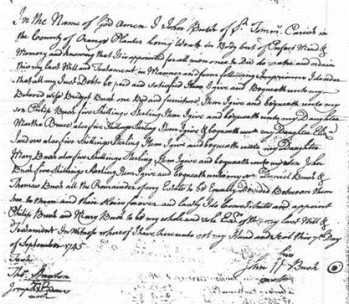
On September 7th, 1745, John Sr. wrote his last Will and Testament. In it he gave to his “beloved wife, Bridget Bush, one bed and furniture”. Thomas and Daniel, who are likely his youngest children, received “remainder of my estate, to be equally divided between them”. The rest of his children received “five shillings sterling” having already been gifted land.[xlvi] It appears his estate at that time consisted of 3 heads of Cattle.[xlvii]
Unfortunately, we know quite a bit less about John Jr. He moved to Bedford County and married Martha whose last name is also unknown. Between them they had 9 children. At some point they moved to Bedford County Virginia. Their children were Mary Margaret, Francis, Elizabeth, Miley, Philip, Darkish, Ann and Susanna. Their daughter Mary Margaret eventually married Congrave Jackson, but before we look at their lives, let’s look at the other major branch(es) in Elizabeth’s tree.
Brockman, Burris and Embree
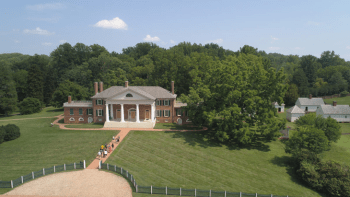
Our story of the Brockman, Burris, Embree line(s) start on June 2nd, 1732 when Samuel Brockman purchased 300 acres and 1200 pounds of Tabacco from John Henderson a large track of land in Spotsylvania County Virginia[xlviii]. Though over 100 miles northwest from the Chesapeake area, this also was a very English settlement. This plantation only 16 miles from the Plantation of James Madison, father of James Madison, 4th president of the future United States of America.
| The following is a family legend which adds color to the Brockmans. I can’t prove it is accurate, but it gives us a glimpse into one way people arrived in the Virginia Colony: In 1674 Henry Brockman came to St. Marie County in Maryland from Barbados. He was able to do so through indenturing himself to Captain John Jourdaine and when he completed his service, he proved his right to 50 acres of land “for the service to the captain.” Despite the 4-1 men to woman ratio, he was able to marry Rebecca Salmon (or maybe Samuell) in 1675. Still in St. Marie County, Rebecca gave birth to Samuel Brockman around 1690. In 1700 Henry returned to England to claim an inheritance and sadly died enroute. Likely in the early 1700s, Samuel purchased land in King and Queen County in Virginia. It is likely in this area that he met his wife Mary (last name lost to time). This is where he and Mary started to build their family. In 1728 he sold some of that land to the same John Henderson who sold him the land in 1732. |
In 1734 Samuel’s plantation became part of Orange County when the Virginia House of Burgesses divided Spotsylvania. Named after William, Prince of Orange it had no western border until 1738 when Augusta County was formed.[xlix] According to the Brockman Scrapbook[5] their “Great House” was named the “White House”, which appears to be a common name in this area and should not be confused the “White House” which was the scene of the wedding of Martha Dandridge Custis and George Washington.
Samuel and Mary had at least 7 children, Sarah Elizabeth, Elizabeth Betty, John, Samuel (jr.), William, Mary M. and Rachel. In support of this large family and their plantation they also had many slaves, though I don’t know exactly how many.
Around this time, a man by the name of Thomas Burrus was living in Orange County. Virtually all that we know comes from his will. From it we can confirm that he lived in St. Thomas Parish in Orange County and had a wife named Frances. From his will, written in 1789 we also know that he had 11 children, Mildred “Millie” Elizabeth, Sally, Fanny, Frances Tandy, Jane Luise, Sarah, Morning, Roger, William Tandy and Thomas.[l] During his life he had at least 8 slaves, Absalom, Nan, Sukey, Bed, Duke, Agnes, Dinah, Violet. Finally, his plantation was over 2000 acres.
At some point in the 1740s John Embree was also a resident of Orange County. John is also a mystery; we don’t even know the name of his wife. What I know for sure is that he had at least 4 sons, Richard, Robert, William, Joseph, and based on the final settlement of his will maybe as many as 7 daughters.[li]
These three families were very close. In his will, John Embree appoints his “trusty friend Samuel Brockman” as one of two executors. Thomas Burrus had two daughters, Mildred, and Fanny, who married an Embree. These families are also linked when Mildred Burrus (daughter of Thomas Burrus) married Joseph Joel Embree, likely in the 1760s.
As John Embree and Thomas Burrus were building their families, Samuel Brockman Jr. got married and started having children of his own. It is believed that he had two wives. His first was likely Mary Woolfolk as Samuel had received a land transfer from a Richard Woolfolk (her father).[lii] The evidence for this is compelling, but circumstantial. More directly we find Samuel and Rebecca Brockman (birth name unknown) selling 350 acres of land to his brother William, which they had jointly received from their father, Samuel (sr.).[liii] Over time, Samuel had 8 children, William, John, Jemima, Suckey, Sallie, Mary, William and John.
Understanding that this encompasses a lot of names, it is worth summarizing. There are three families that we are concerned with. Our known progenitors are Samuel Brockman Sr., John Embree and Thomas Burrus. The second generation of our ancestors include Samuel Jr., Joseph Joel Embree, and Mildred Burrus. Samuel went on to marry Mary Woolfolk and later Rebecca. In the 1760s Joseph Joel Embree and Mildred Burrus married each other.
In 1766, we lost Samuel Brockman Sr. who left his wife Mary “all the land he now lives until she passes”.[liv] It is also through the reading of this will that you clearly see how slaves were treated as property not people. In one line he left to his wife Mary “all my negroes”. We don’t know all their names, but the ones we know were named: Dinah (who was given to Samuel Jr.), Phillis (given to William), George (given to Mary), Winnie (given to Elizabeth), Hercules (given to Sarah), Peter (given to William and Samuel Jr.), Ben (given to Samuel Jr.). Finally, there were the recently born Judy, Davy and Sarah “that my said wife, Mary shall have use of during her Natural life”.

The other two progenitors, Thomas Burrus and John Embree lived until 1789 and 1790 respectively. [lv]
In the 1770s, Samuel Brockman Jr.[6] grew his estate through purchasing 400 acres of land that bordered his property, for 81 Pounds, 6 Shillings and 8 Pence. [lvi] His estate grew further when in November 1775 Mary Brockman died which then led to the final division of the estate.[lvii]

I have found no hard evidence that he or anyone in this 2nd generation were directly involved in the Revolutionary war. Though I have found, for example a Samuel Brookman who was a Lt. in the Virginia Militia. It is during this time that Joseph Joel Embree and Mildred “Millie” Burrus started building their family. They are said to have had 9 children, Jacob, William Simpson, Nancy, Thomas Burris, Caleb, Mary Elizabeth “Polly”, Elizabeth, John, and Frances “Franky”. However, I note that there are a few Joseph’s in VA and KY.
John Brockman in Virginia
As her Parents were first cousins, Elizabeth Jackson had only 6 great grandparents. They are Congrave Jackson who married Mary Bush, Joseph Joel Embree who married Mildred Burrus and John Brockman who married Elizabeth Burrus (Mildred’s sister). Only John and Elizabeth stayed in Virginia, the other four moved to the new colony of Kentucky. For now, let’s stay in Virginia with John and Elizabeth.
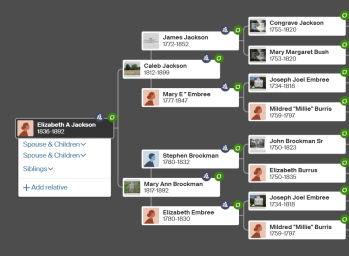
Elizabeth was the daughter of Thomas Burrus and John the son of Samuel Brockman Jr. Both were likely born in the 1750s, though we can’t be sure. It is likely in 1774 the two of them got married as this is when John was deeded 176 acres of land by his father Samuel.[lviii] The property is described as located on the branches of the Pamunkey River which is on the lower end of Orange Co, between the North Fork and the South Fork of the North Anna River which unites and flows into the Pamunkey. They named the property Mount Airy, and it is here that they had 11 children. [lix] They are Samuel Burrus, Eleanor, Elyjah, Molly “Polly”, Jacob Burrus, Stephen (Elizabeth’s Grandfather), John, Rebecca, Asa, Oswald and Thomas. We don’t know the exact dates of birth, but we can narrow Stephen Brockman’s birth to sometime in the 1780s.[lx]
It is difficult to say with certainty what John was doing during the Revolutionary war, but we do know that a John Brockman was made Lieutenant in 1777.[lxi] In 1782, John appeared in the “Virginia Early Census Index” as living in Orange County, now part of the United States of America.
My ~4th cousin Brian Leslie
A couple of years ago I received a message from Brian Leslie asking me for information as he had been identified as a 2nd to 4th cousin of my father, Thomas Logan. Curious about how we are related I asked him what he knew and got the following reply:
“Isaiah was my great-grandfather. He was born in Henrico County; Virginia while being enslaved by Thomas Burton. When in Virginia, the farm manager of the Burton farm was James Henry Mallory. At some point, the Burtons moved to my hometown of Madison County, Alabama. In 1870, Isaiah was listed as a Mallory. In 1880, he took on the Burton last name.”
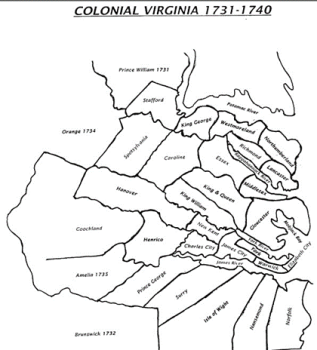
As I have discussed, the record keeping for enslaved individuals was very poor, as they were considered property not people, they did not track surnames, keep birth records or other documents that Genealogists count on when tracing our roots. That said we at least had one big hint which was the fact that Isaiah was born in Henrico County, Virginia, which as you can see on the map below, is not far from Orange, Spotsylvania, and Caroline County. We also know that sexual predation especially from young men with slaves was common. This clearly was a mystery that was worth trying to solve.
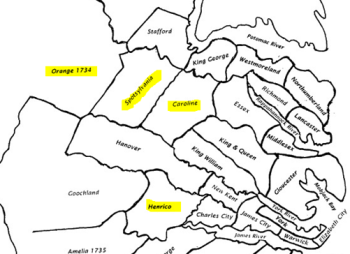
Given that there was no way to use conventional Genealogical tools, we turned to DNA. Specifically, autosomal DNA which allowed us to search for people who were cousins to both of us. By comparing contacts, we were able to narrow the list of potential ancestors down to a small number of surnames. We then further reduced the list by looking for people who were in Virginia, as adults, between 1800 and 1856 (year of birth of Isaiah).
In the end the surnames that came up the most were Embree, Brockman and Burrus. Many of my Brockman and Burrus ancestors moved to Kentucky in the late 1700s to very early 1800s, further narrowing our search. All Burrus ancestors were removed as they were not in Virginia at the right time. Embree is possible, but unlikely as the only candidate is Joseph Joel’s son Caleb Embree who moved out of Virginia in 1803. This left us with John Brockman who is the most likely common ancestor connecting Brian Leslie with myself. Below you will find 6 scenarios that are the most likely to have occurred. Personally, I believe scenario #1 is most likely because of the Mallory connection.
- John Brockman’s daughter Molly Brockman married James Mallory. We know that they got married in Virginia in 1801. It is possible that they had a son who was the father or Grandfather of Isiah Burton.
- If true, this would make Brian and myself 3rd cousins twice removed.
- John Brockman’s son Oswald Brockman lived in VA from the 1790s until at least 1830. Therefore, he could be Isaiah’s Grandfather. Interestingly he was married in Louisa County, which was formed out of Hanover County, which on the map borders with Henrico.
- If true, this would make Brian and myself 3rd cousins twice removed.
- John Brockman’s son, Samuel Burris Brockman Jr, was still in Orange Co in 1791 when he married Nancy Durrett. Moved to KY, by or before 1810.
- If true, this would make Brian and myself 3rd cousins twice removed.
- John Brockman’s son, Asa Brockman was in Orange County VA from 1773 to 1861. This means he could be Isaiah’s Father, Grandfather or Great Grandfather.
- If true, this would make Brian and myself anywhere from 2nd cousin twice removed to 4th cousin once removed.
- John Brockman’s son Stephen Brockman (my direct ancestor) moved out of Virginia by 1800. The only way it is him is if he is Isiah’s great Grandfather.
- If true, this would make Brian and myself 4th cousins once removed and Stephen our closest common ancestor.
- John Brockman could be the Great Grandfather of Isaiah.
- If true, this would make Brian and myself 5th Cousins.
Open Questions
- Who was Abraham Bush’s first wife?
- When did Abraham Bush make it to the USA and where did he come from?
- Is Abraham’s son John the father of John Bush (who is the father of Margaret Bush)?
- Is the connection from John Bush, father of Mary Margaret Bush accurate?
- Is Henry Brockman really the father of Samuel Brockman?
- Is the story of Samuel Brockman prior to 1732 correct?
- Do we have the correct wives for Samuel Brockman Jr.?
[1] 1657 was the date of the Headright, he probably arrived earlier.
[2] Note, spelling errors retained as it is a direct quote
[3] Note, the signature may look like a Mary but all others are Margaret or Peggy, I believe it is actually “Marg Bush” in that document.
[4] Peumansend got its name from a pirate named Peuman who preyed on boats on the Rappahannock. While fleeing, he went into a creek where he was captured and slain. From then on, the creek was named “Peuman’s end”
[5] To date all my independent research has found the Brockman Scrapbook to be well researched, with no errors found; The Brockman Scrapbook by William Evertt Brockman, 1952. Mentions of the White House is throughout the book.
[6] After his father passed, he stopped using Jr. but I will continue to use the name Samuel Jr. for continuities sake.
[i] IBID
[ii] Albions Seed Chapter 2
[iii] IBID
[iv] IBID
[v] IBID
[vi] IBID
[vii] Lancaster County Court Orders, 1655-1666, p 34
[viii] Lancaster County Court Orders, 1:526; Wills of Rappahonnock County, Virginia, 1656-1692, pg 100 which is in the section “Wills in the Record Book enttiled Deeds &c. No. 6, 1682-1683
[ix] Indentured Servants in Colonial Virginia – Encyclopedia Virginia
[x] Tobacco in Colonial Virginia – Encyclopedia Virginia
[xi] Lancaster County Virginia Lancaster County, Virginia (lancova.com)
[xii] Tobacco in Colonial Virginia – Encyclopedia Virginia
[xiii] Indentured Servants in Colonial Virginia – Encyclopedia Virginia
[xiv] Lancaster County Court Orders, 1655-1666, p 200
[xv] Lancaster County Record book no 2 1654-1666 p. 347 held in Ancestry.
[xvi] Patent book No 5, pg 458 — #498 – Cavaliers and pioneers; abstracts of Virginia land patents … – Full View | HathiTrust Digital Library
[xvii] Lancaster County Court Orders, 1:110; Captain Billy Bush and theBush Settlement Clark County, Kentucky a Family History by Harry Enoch, p 147
[xviii] “Will Abstracts of Lancaster County, Virginia 1675-1689” by Ruth & Sam Sparaccio.; Abraham Bush, Will dated Feb. – Genealogy.com : Virginia, U.S, Marriages of the Northern Neck of Virgina, US 1649-1800 by Robert K. Headly Jr, pg 60 held in Ancestry
[xix] Lancaster County Will Book 8:9
[xx] Lancaster county deed book 4:41; Deed and will books, 1652-1900 ; general indexes, 1652-1900 (familysearch.org)
[xxi] Lancaster County Court Orders, 1:526
[xxii] “Will Abstracts of Lancaster County, Virginia 1675-1689” by Ruth & Sam Sparaccio.
[xxiii] Legislative Divorce in Virginia, 1803-1850 by Glenda Riley, found in JSTOR; Legislative Divorce in Virginia, 1803-1850 on JSTOR
[xxiv] Lancaster County Court Orders, vol 3 p 167; vol 4 pgs 7, 50, 128, 152, Vol 5, 13, 56 and 109
[xxv] Lancaster County Deed Book vol 7 112; Northern Neck Grant Book 2 pg 222, 223
[xxvi] Lancaster County Deed Book vol 7 112; Deed and will books, 1652-1900 ; general indexes, 1652-1900 (familysearch.org)
[xxvii] Spotsylvania County Deed Book A:316
[xxviii] Lancaster County Court Orders vol 4 pgs 36 & 55 and vol 4 see pg 42
[xxix] Lancaster County Court Orders vol 4 pg 94
[xxx] Lancaster Co Court orders, vol 5 pgs 85-91
[xxxi] Captain Billy Bush and the Bush Settlement by Harry G. Enoch, pg165
[xxxii] Lancaster County Court Orders 5:109
[xxxiii] Lancaster County Deed book vol 9 pg 117-119
[xxxiv] Essex County Deeds and wills 12:412
[xxxv] Virginia Patent Book 11:93
[xxxvi] Virginia Patent book 12:493; Patents, 1623-1774, 42 vols. ; index, land patents, [to] volumes 1-42 (familysearch.org)
[xxxvii] A:316;Captain Billy Bush and Bush Settlement Clark County, Kentucky A family History by Harry G Enoch pgs 173, 174
[xxxviii] Spotsylvania County Deed Book
[xxxix] Spotsylvania County Order Book, 1724-1730 p. 321
[xl] Virginia County Records, Spotsylvania County, 1721-1800; Deed Book B 1729-1734 pg 115
[xli] Spotsylvania County Order Book, 1730-1738, P. 513
[xlii] Virginia Patent Book 28:303
[xliii] Virginia Patent Book 15:141; Orange County Deed Book 1:378; General index to deeds, 1734-1892; deeds, 1734-1865; court records, 1734-1760; marriage and birth records, 1751-1778; ark:/61903/3:1:3Q9M-C9BK-L7YL-R?i=232&cat=370458 (familysearch.org)
[xliv] Orange County Deed book 6:20; General index to deeds, 1734-1892; deeds, 1734-1865; court records, 1734-1760; marriage and birth records, 1751-1778; ark:/61903/3:1:3Q9M-C9BK-B9JL-6?i=23&cat=370458 (familysearch.org)
[xlv] Orange County Deed book 6:270
[xlvi] Will Book No. 2 pg 94 Court Record of Orange County, Virginia.
[xlvii] IBID
[xlviii] Virginia, Spotsylvania County Records, Deed book B. 1729-1734
[xlix] A History of Orange County, Virginia, from its formation in 1734 (o.s.) to the end of reconstruction in 1870; Pg 22
[l] Index to Wills, 1734-1947 ; Will Books, 1735-1906; Author: Virginia. County Court (Orange County)
[li] Ancestry.com. Virginia, U.S., Wills and Probate Records, 1652-1900 [database on-line]. Lehi, UT, USA: Ancestry.com Operations, Inc., 2021. Original data:Virginia County, District, and Probate Courts.
[lii] Pg. 134 of The Brockman Scrapbook (note this is a secondary source, but I have been able to validate a good representative sampling of their data.
[liii] Pg 9 of The Brockman Scrapbook (note this is a secondary source, but I have been able to validate a good representative sampling of their data.
[liv] Virginia, U.S., Wills and Probate Records, 1652-1900
[lv] John Embree and Tomas Burrus both from Will Book, Vol 3 in Orange County,
[lvi] Orange County Virginai Deed Book No 15 1768 – 1773 pg 232
[lvii] Virginia Gazette pg 3 (Willinsburg)
[lviii] Pg 46a of The Brockman Scrapbook (note this is a secondary source, but I have been able to validate a good representative sampling of their data.
[lix] IBID
[lx] 1830 United States Federal Census
[lxi] Minute book of Orange County (pg 61)
[i] English Civil Wars – 1642-46, Parliament, King Charles | Britannica
[ii] The Cavalier flight to Virginia (britishheritage.com)
[iii] National Park Service: A Short History of Jamestown – Historic Jamestowne Part of Colonial National Historical Park (U.S. National Park Service) (nps.gov)
 Becoming Us
WOW! Wild story🥰
LikeLike
Agree, it was lucky to find all that info
LikeLike