


Chapter One: From Nomads to the Jewish Kingdom
Adam & Eve, approximately 200,000 years ago in modern day Botswana
At an unknown date, an unnamed tribe of ancient Humans lived in the Makgadikgadi Basin. Within this tribe was the mother of all living humans. This woman, our ~8,000th great grandmother[1] is known as the “Mitochondrial Eve”. Strictly speaking “Eve” is not a single or a specific woman but a group of closely related women who have given all who live today, our mitochondrial DNA.[i] Around this time[2], in an unknown location in Africa lived the father of all living men, the Y-DNA Adam.
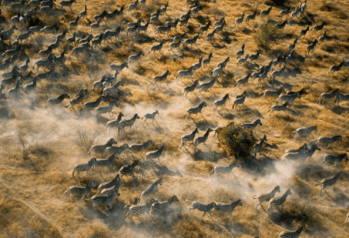
Their descendants spent the next 130,000 years almost exclusively living in Africa. Then, around 65,000 years ago, our ~3,000th great grandmother and her tribe were among the first humans to leave Africa[ii]. Near that time, but likely in a different tribe our ~3,000th great-grandfather left Africa, crossing a land bridge from modern day Djibouti into a fertile Arabian Peninsula.
The Levant
While it is impossible to know exactly where our ancestors went next, we do know that between 14,000 and 12,000 BCE our 640th to our 560th, great-grandmother lived in the Levant, likely as a member of the Natufian culture.[iii] A number of remains were found in the Raqefet Cave in Mount Carmel, Israel. One wonders if a member of our ancestor’s tribe were among those. These cave dwellers had sophisticated stone tools and had discovered the techniques required to brew beer.[iv]
At that time, our 640th to 560th great-grandfather probably lived in southeast Turkey or northern Syria. His descendants likely entered the Levant around 10,000 BCE, many tribes would follow over thousands of years. He also was the ancestor of the “Cohens”, and, therefore, according to the Bible, Moses and his brother Aaron.[v]
In 8000 BCE the earth rapidly warmed as the last ice age came to an end. This brought more moisture to this area, which significantly increased the available food supplies, enabling the Natufians to create permanent settlements.
These settlements were comprised of stone buildings with a brushwood roof. Residents, who possibly included our 400th great-grandfather and/or 400th great-grandmother, dined on wild cereals, nuts, fruits, fish, gazelle, deer and cattle. They cared for their dead by burying them in cemeteries, marking some with limestone slabs. In some cases, we have found Natufians buried alongside their dog.[vi]
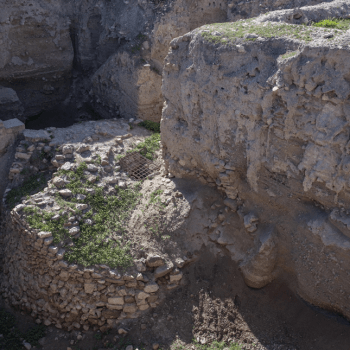
Thanks to advances in agriculture, these permanent settlements began to grow and become towns. One of the earliest is Jericho which had a massive stone wall around the settlement and was strengthened by at least one massive stone tower. Within the walls there were between 2,000 to 3,000 people. By 5000 BCE we are starting to find a significant increase in villages around this area. These villagers lived in huts sunk into the ground and utilized clay pots.[vii]
Canaan and the Bible
Now the LORD had said to Abram:
“Get out of your country From your family, And from your father’s house, To a land that I will show you.
I will make you a great nation: I will bless you And make your name great; And you shall be a blessing.
And I will bless those that bless you, And I will curse him that curses you; And in you shall all families of the earth shall be blessed.”
So Abram departed, as the LORD had spoken to him, and Lot went with him. And Abram [was] seventy-five years old when he departed from Haran. Then Abram took Sarai his wife, and Lot his brother’s son, and all their possessions that they had gathered, and the people whom they had aquired in Haran, and they departed to go to the land of Canaan. So they came to the land of Canaan.
Gensis 12:1 – 12:5
It is believed that in 3000 BCE, the Levant slowly entered the Early Bronze Age. Its residents are often referred to as proto-Canaanites. It is at this time that our ~200th great grandparents saw their culture(s) establish trade networks. Despite entering the bronze age, stone and copper tools likely dominated.[viii]
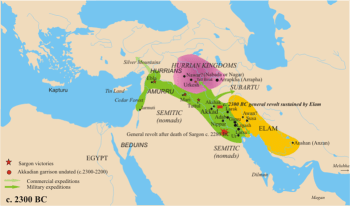
Around 2300 BCE our ~172nd great grandparents along with their various tribes, were integrated, likely by force, into the Akkadian Empire by Sargon the Great. It is believed that Sargon brought with him roads, writing, and improved irrigation. Wealth was accumulated through the trade of ceramics. The Akkadian Empire fell in 2083 BCE, and this region entered another dark age with people likely returning to a more nomadic life.[ix]
The Middle Bronze began in the 2nd Millennium BCE (~2000 BCE – ~1550 BCE). It is at this time that Canaan and Egypt and Mesopotamia became major trading partners. This led to increased urbanization. All of this was enabled by Cuneiform which became a common form of written language.[x] This is also, according to the bible, the time of Abraham, Isaac and Jacob.
| Author’s note: I believe that it is impossible to understand our ancestor’s history without including both the Biblical narrative and secular research. It feels wrong to try to combine the two into a single narrative, specifically for this period. Therefore, what follows is what the Old Testament says happened around the middle to late bronze age. |
Abraham and his descendants:
The Bible tells us that Abraham (aka Abram) spoke to the Lord who told him to leave his home, his community (clan), and his family, to create a great nation.[xi] Abraham, did as the Lord commanded and journeyed to Sechem, (in the modern-day West Bank). Upon arriving, the Lord told him that “To your descendants I will give this land”.[xii]
Eventually a famine led him and his people to Egypt. Abram expressed to his wife, Sarai “Indeed I know that you are a woman of beautiful countenance. Therefore, it will happen, when the Egyptians see you, that they will say, ‘This is his wife’ and they will kill me.” Therefore, he asked her to “please say that you are my sister.”[xiii]
As a result, Sarai was taken to the Pharaoh who made her his wife. This displeased the Lord who “plagued Pharaoh and his house”. Discovering that that this punishment was due to Sarai being Abram’s wife, the Pharoah said, “Now therefore, here is your wife; take her and go your way”. Therefore, Abraham returned to Canaan “with his wife and all that he had”, which included his Egyptian servants.[xiv]
After returning to Canaan the Lord told Abram that “No longer shall your name be called Abram (Exalted Father), but your name shall be Abraham (Father of Many); for I have made you a father of many nations. The first nation was from his first child, a son he had with his wife’s Egyptian servant, Hagar. He was named Ishmael[xv] who was the father of the Arab People. Later, Abraham had a son, Isaac with his wife, who is now named Sarah.[xvi] It is believed that Isaac was the forefather of the Jewish People. The Lord blessed both Ishmael and Isaac. Unfortunately, their followers have used that blessing to dispute the right to this land.[xvii]
Isaac had a son Jacob, from whom the 12 tribes of Israel descended. Jacob settled in Luz or “Bethel” where it is said that he destroyed all the “foreign Gods” and built an alter to the Lord. It is here that “God appeared to him … and blessed him. God said to him ‘Your name is Jacob; your name shall not be called Jacob anymore, but Israel shall be your name.”[xviii]
Jacob had 12 sons who became the fathers of the 12 tribes of Israel. They are: Reuben, Simeon, Levi, Judah, Issachar, Zebulun., Joseph, Benjamin, Bilhah, Dan, Naphtali, Zilpah, Gad and Asher.[xix]
Secular research for this Era:
Archaeological evidence states that around this time this area was claimed by various empires and experienced immigration by new cultures. Of note, in 1725 BCE Canaan saw the arrival of Semitic people known as the Hyksos. The Hyksos led a war with the Egyptians but lost. Therefore, Canaan was absorbed into the Egyptian Empire and was ruled by Pharaohs such as, Hatshepsut, Thutmose III, Amenhotep III and Ramesses the Great. Through this time this region remained in turmoil as Assyrian, Hittite and Egyptian rulers fought to control it.[xx]
Another notable invasion was from the Habiru, who may or may not be the Hebrews.[xxi] It is the Habiru who are referenced in the Amarna letters, from around 1350 BCE. The letters state that the land of Jerusalem was given to them by the king.[xxii] They did not keep it long since around 100 years later, the Egyptian Pharaoh Merneptah recorded that “Israel is laid to waste, his seed is no more”.[xxiii]
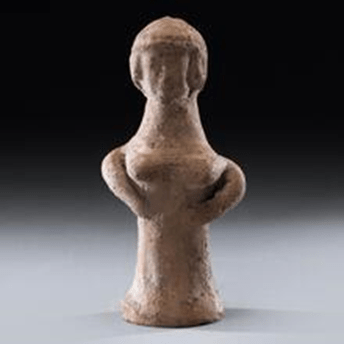
The clashing of Empires and introduction of new people not only led to both military conflicts as well as religious challenges for the people of this region. Many Canaanites worshiped the goddesses Astarte, Ashera and Anath, in addition to El and Baal. These gods would be represented by Idols and sacred poles, which was and is forbidden in the Jewish religion.
The Bible discusses these gods and goddesses and puts them center stage as prophets strove to end Idol worship and introduce the people of this region to “YHWY” or “The Lord”. Research shows that it is likely that the people of this region worshiped poles to Asherah which were next to altars to “YHWH”. This would continue through the Jewish Kingdoms until the first Israelite Diaspora.[xxiv]
The Jewish Kingdoms ~1200 BCE – 597 BCE
And it came to pass, when all kings who were on this side of the Jordan, in the hills and in the lowlands and in all the coasts of the great sea toward Lebanon – the Hittite, the Amorite, the Canaanite, the Perizzite, the Hivite, and the Jebusite – heard about it, that they gathered together, to fight with Joshua and with Israel, with one accord.
Joshua 9:1, 9:2
So Joshua took the whole land, according to all that the LORD said to Moses; and Joshua gave it as an inheritance to Israel according to their divisions by their tribes.
Joshua 11:23
The 12 tribes are shrouded in quite a bit of mystery outside of the Bible. It is not clear what happened to most of them, but we do know that by 1000 BCE this area was split into two kingdoms, Judah in the south and Israel in the north.[xxv]

It is not known where our ~120th great-grandparents lived at this time. Maybe some were in Judah and some in Israel. For those in Judah, they may have been ruled by the person referred to in the Bible as King David who began a long dynasty in Judah. For those in Israel, they may have been ruled by Omri who was written about by Mesha, king of Moab: “Omri was the king of Israel, and he oppressed Moab for many days, for Kemos was angry with this land. And his son succeeded him, and he said – he too – ‘I will oppress Moab!’”.[xxvi]

[1] Assuming a new generation very 25 years
[2] There appears to be great uncertainty when the Y-DNA Adam lived. Some studies point to 235k years ago while others say 40k years after eve.
[3] This file is licensed under the Creative Commons Attribution 3.0 Unported license.
[i] Cradle of modern human life found in Botswana…maybe | PBS News, accessed by Sean Logan on the 22nd of October 2024.
[ii] FamlyTree DNA results from Sean Logan’s mtDNA test as of 22 Oct 2024.
[iii] IBID, assigning us to haplogroup N1b1b1.
[iv] Traces of 13,000-Year-Old Beer Found in Israel | Smithsonian, accessed by Sean Logan on the 22nd of October 2024.
[v] FamilyTree DNA results from Keith Olives Big-Y DNA test placing us in haplogroup J-FTG13792, informed by the Globetrekker tool.
[vi] Ancient DNA links Natufian Hunter-Gatherers with Neolithic Levantine Farmers – Scientific Inquirer, accessed by Sean Logan on the 22nd of October 2024.
[vii] Jericho | Facts & History | Britannica, accessed by Sean Logan on the 22nd of October 2024
[viii] Canaan | Definition, Map, History, & Facts | Britannica, accessed by Sean Logan on the 23rd of October 2024; Canaan – World History Encyclopedia, accessed by Sean Logan on the 23rd of October 2024
[ix] IBID
[x] Canaan – World History Encyclopedia, accessed by Sean Logan on the 23rd of October 2024
[xi] Gensis 12:1
[xii] Gensis 12:7
[xiii] Gensis 12:10 to 12:13
[xiv] Gensis 12:20
[xv] Gensis 16
[xvi] Gensis 21
[xvii] “The Founding of Israel, The journey to a Jewish Homeland from Abraham to the Holocaust” by Martin Connolly, pg 3
[xviii] Genesis 35
[xix] IBID
[xx] Canaan – World History Encyclopedia
[xxi] IBID
[xxii] “The Founding of Israel, The journey to a Jewish Homeland from Abraham to the Holocaust” by Martin Connolly, pg 2
[xxiii] The Mernaptah Stele, this is the first evidence that this region was named Israel.
[xxiv] Asherah/Asherim: Bible | Jewish Women’s Archive
[xxv] “The Founding of Israel, The journey to a Jewish Homeland from Abraham to the Holocaust” by Martin Connolly, pgs. 5-7
[xxvi] Mesha Stele
 Becoming Us