

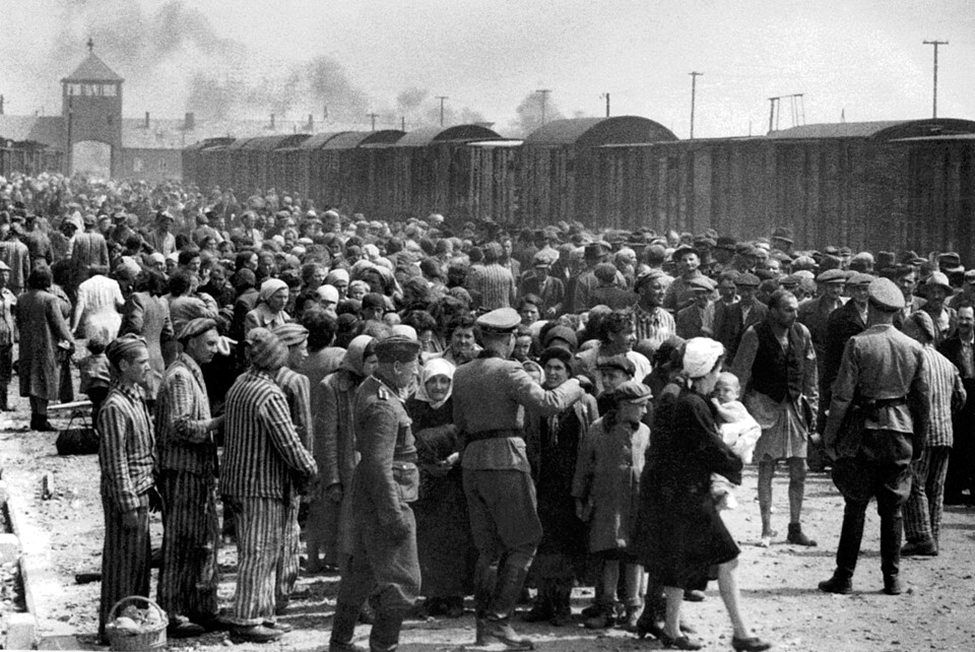
Liquidation of the Pabianice Ghetto
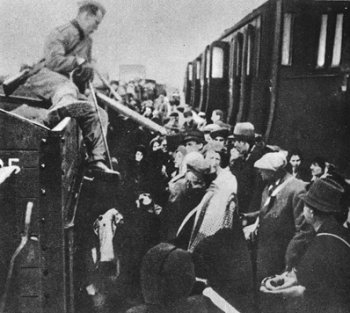
In February 1942, the Gestapo entered the Pabiaince Ghetto and conducted a health examination on all prisoners. After the examination everyone was given a tattoo of an A or a B. On the 16th of May all inhabitants were ordered to wait in front of their residence by 4pm. Failure to comply resulted in the immediate execution of the offender. Approximately 3,600 were in group A. They were sent to the Łódź Ghetto. There were over 3,200 people in group B. They were loaded into cattle trains and sent to the Chełmno death camp.[i]
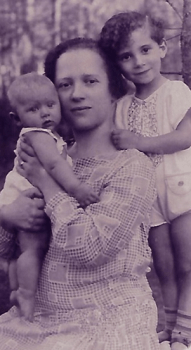
Chaia Olej (Judkowicz), widow of Machel Olej, and her two daughters, Rifka and Masha Olej, were in group A. Therefore, on the 29th of May 1942, they were assigned Flat 6 on Muhl Gasse 81 within the Łódź Ghetto.[ii] It is not known what happened to them after their arrival. They are presumed murdered, possibly within the Łódź Ghetto.
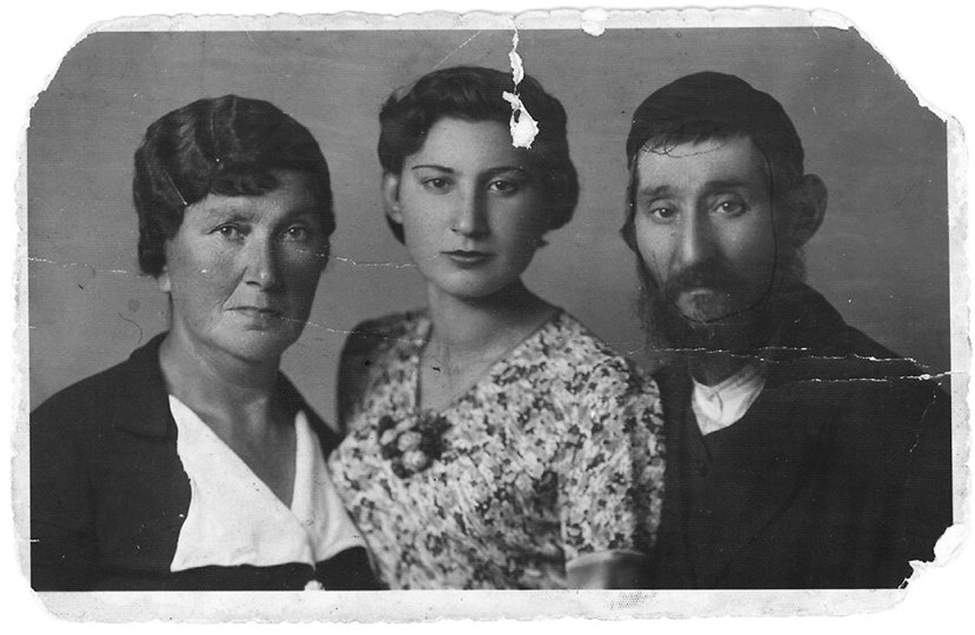
Many of the Levin’s in the Pabianice Ghetto also were group A, and therefore deported to the Łódź Ghetto. They include Chaim Eliezer Edelshtein (son of Zisa Rajzla Levin), and his daughter Fajga who were assigned to Flat 6 on Sulzfelder Strasse.[iii] [iv] Living with them were Fajwel, Masza, and Chana. It is not known for sure if the three of them were Chaim Luzer and Estera’s children.[v] [vi] [vii] Lajb’s daughters Fajga Janowska (Levin), Hinda Fuks (Levin) and Branda Cwiling (Levin) were in the Pabianice Ghetto and were in group A.[viii] They were deported to the Łódź Ghetto onto Insel Strasse 26, and later in 1942 were moved to Muhl Gasse 24.[1] [ix] [x] Finally, Jakob Levin, his wife Pesa Cycanowicz and their children Estera and Chana were sent to 10 Franz Strasse, Flat 10 within the Łódź Ghetto.[xi] [xii] [xiii] They are presumed murdered in that ghetto.
We may never know which of our relatives were in group B. However, if you recall from chapter 13, there were quite a bit of our Levin relatives whose fate was not known and they were presumed murdered. It is likely that some were in group B.
Zdunska Wola
Although Issac, Berek and Morka Wolf Olej had all settled and raised their families in Zdunska Wola, we have only been able to track Avram Moshe Olej, son of Berek into the Zdunska Wola Ghetto.
Starting as an open Ghetto marked with pillars, in 1940 it was fenced in and closed. It held 7500 local Jews and over time added up to 3000 more. Like all other Ghettos, conditions were very poor with 40% of the inhabitants being considered in need of help. In June or early July of 1942, it was decided to liquidate the Ghetto. Like Pabianice, people were segregated into groups A and B. This selection was conducted by Hans Biebow, administrator of the the Łódź Ghetto. Hans Biebow personally shot many Jews who were not selected.[xiv]
Ominously the selection took place in the local cemetery. After 2-3 days, over 550 Jews were shot in the Cemetery, and as many as 9,000 were sent to the Chełmno Death camp. Just 1500 Jews were deemed fit for labor and sent to the Łódź Ghetto.[xv]
Among the 1500 Jews who were deemed fit for labor was Avram Moshe Olej, and his wife Rywka Wagman.[xvi] [xvii] [xviii] They both ended up in the Łódź Ghetto where they were assigned to live on Muhl Gasse 11. Their fate is not known and are presumed murdered. It is also not known where Avram Moshe’s siblings were at that time, except for Cerla, who somehow made it to Belgium.
It is also unknown if any of Isaac Olej’s children, Ester, Pesa, Rachel, and Chana were in the Zdunska Wola Ghetto. They are presumed murdered in the Holocaust.
“The Final Solution”
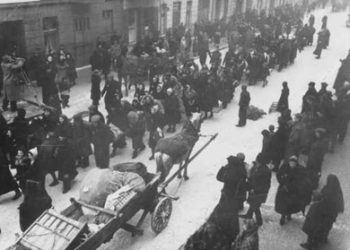
Ultimately the Nazis enacted “the final solution” to get eliminate all they deemed inferior. To support this horrific goal, Chełmno was opened as the first killing center. Mass murder began on the 8th of December 1941 with the arrival of 700 Jewish men, women and children. They were the first of an estimated 152,000 Jews murdered at this one center.[xix]
In December 1941, the head of the Judenrat, Mordechai Chaim Rumkowski, of the Łódź ghetto was ordered to supply the Nazi Germans with 20,000 Jews. This began the first wave of mass deportations with approximately 55,000 Jews ultimately sent to the Chelmo killing center.[xx]
In January 1942, Jakob Horonczyk received the dreaded summons for him and his family to assemble at the main prison. Jakob was the 45 years old grandson of Aharon Mayer Olej and as a Fleischer was someone who likely cared for those around him. With him was his wife Rywka,(38) and their children, Chana Dwojra (16), Izreal Mosze (12), Luba (7) and Aron Meir (5) [xxi] To get to the assembly required what was likely a difficult walk for a starving family in the bitter cold of January in Poland. When they arrived their food rations were confiscated. They were given a half a loaf of bread and a sausage for the journey.[xxii]
On the 22nd of January 1942, Transport VII left the Łódź ghetto for Chelmo with 704 Jews.[xxiii] Once they arrived, under guard from the Sonderkommando, Jakob and his family disembarked in the courtyard of the manor house. They were told that they were in a transit camp on their way to another location for forced labor. In preparation, they were ordered into the manor house to be bathed and disinfected.[xxiv]
Once inside Jakob and his family were ordered to undress and hand over all valuables. They were then led to the basement where they walked up a walled wooden ramp into the back of a van. Once it was so full that no one could move, the doors were sealed and the van was started. A tube was attached to the exhaust pipe and the carbon monoxide fumes killed all inside. Once all were dead, the van was driven to a mass grave in the forest where they were buried. However, as a final insult, even in death they could not rest. It was later decided to hide the evidence, so they were exhumed and cremated.[xxv]
On the 28th of February, Jakob’s brother, Szyja received the same summons and took the same trip.[xxvi] It is not known why, but the rest of his family did not join him. It is possible that they were not properly recorded or died at a different date.[2] On the 1st of March, their sister, Bajla Dyna Horonczyk got the same summons and was sent to Chelmno. With er was Tobcia Horonczyk, maybe her daughter or another relative. Tobcia was only 7.[xxvii]
Over the next several months at least three of our relatives passed in the Ghetto. Jakob’s father, Szymon Aba Horonczyk died on the 22nd of January 1942.[xxviii] Szyomn’s son Lipman Horonczyk passed on the 6th of April 1942.[xxix] Causes are not stated, but many at this time were perishing from starvation and typhus. On the 5th of June, Rajzla Olej, daughter of Mordka Wolf and wife of Nusen Rosenbaum, also died. She was 30 years old and married for one year.[xxx] We do not know what happened to Nusen, he is presumed murdered in the Ghetto. Finally, Breine Perlowicz, Masza Levin’s mother-in-law, died on the 17th of June 1942.[xxxi] When Masza and her son Abram Dawid passed is not known.
This wave of transports was due to come to an end in June, but not before Brajdla Pozgowicz, wife of Mordka Volv Olej, her grandson Abram Josek and Genia were loaded onto transport 28 on the 10th of June 1942 and sent to the Chełmno killing center.[xxxii] [xxxiii] [xxxiv]
The Warsaw and Otwock Ghettos
Though we don’t know the exact fate of our Besser and Popaver relatives we do know what happened in the Ghettos where they resided. What follows is the story of the last few months of the Warsaw and Otwock Ghettos.
Like the Łódź Ghetto, the “Final Solution” was enacted within the Warsaw and Otwock Ghettos. Rumors began and in April, the prisoners in the Warsaw Ghetto “lived in terror of deportation.”[xxxv] In May, the Pawia Street Prison became a center of persecution. Inside, prisoners were tortured and outside it became the point of departure for Auschwitz.[xxxvi] In May, in a sign of things to come, “the Thirteen” (the corrupt Jewish leaders of the Warsaw Ghetto), were “liquidated.”[xxxvii]
By June nearly all smuggling was halted, causing a significant increase in starvation. They also were aware that children and the elderly are being sent to death camps. Because of this, the O.S. group[3] managed to notify the world of their fate. Ringelblum said:
Our toils and tribulations, our devotion and constant terror, have not been in vain. We have struck the enemy a hard blow. It is not important whether or not the relation of the incredible slaughter of Jews will have the desired effect – whether or not the methodical liquidation of entire Jewish communities will too. One thing we know – we have fulfilled our duty. We have overcome every obstacle to achieve our end. Nor will our deaths be meaningless, like the deaths of tens of thousands of Jews. We have struck the enemy a hard blow. We have revealed his Satanic plan to annihilate Polish Jewry, a plan he wished to complete in silence.[xxxviii]
On the 22nd of July, announcements were posted about the resettlement of the Jews in the Warsaw Ghetto. On the 23rd of July the first transport of Jews from Warsaw arrived in Treblinka. It held 7,400 Jews. Having learned from Chełmno, the Nazis created a brutal and efficient method to kill their Jewish prisoners.[xxxix]
Our relatives who were on the transport would have arrived at the camp with thousands of others. They were ordered to leave their luggage but take their documents and valuables with them. Women and children went to the undressing barracks on the left and men to the right. They were then pushed into chambers where they were gassed and then thrown into pits. In this manner, the Nazi Germans were able to murder up to 6,000 Jews in a matter of three hours.[xl]
This process was repeated for nearly two months. By September the Ghetto was reduced from almost a half a million Jews to just 40,000 inhabitants.[xli] In Otwock, the liquidation began in August and was complete in December.[xlii]
In the aftermath, Ringleblum wondered:
Why didn’t we resist when they began to resettle 300,000 Jews from Warsaw? Why did we allow ourselves to be led like sheep to the slaughter? Why did everything come so easy to the enemy? Why didn’t the hangmen suffer a single casualty?[xliii]
He did not answer this question, nor will I. Whatever the answer was, it is in this manner that over 25 of our Besser and Popaver relatives were murdered.
It is not known if any of our relatives were part of the Warsaw Uprising.
Cerla Olej
Cerla Olej, daughter of Berek Olej, managed to escape Poland for the relative safety of Belgium. Unfortunately, Cerla and her husband Pejsack Zalcberg were captured and on the 15th of August, 1942 were loaded onto Transport III from Caserne Dossin, Camp, Belgium and sent to the Auschwitz Birkenau extermination camp.[xliv]
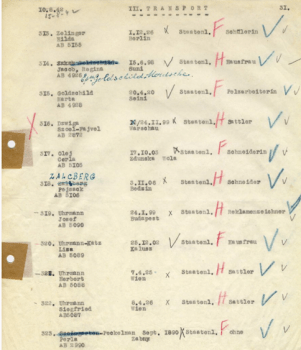
They and the one thousand deportees were instructed to bring provisions for 14 days, work boots, clothing, a bowl, and a cup. They were not told where they were going.[xlv]
On the 17th of August, they arrived at the Auschwitz railyard. 638 of the 1,000 were immediately murdered in the gas chambers. The rest were selected for forced labor. If Cerla and Pejsack were selected for labor detail they would have experienced an equal horror. Conditions were so bad that it is believed that at least one person perished every day from until the end of August. Then the average rose to two a day. Only five of the one thousand were rescued. Cerla and Pejsack were among the 995 who perished.
The End of the Łódź ghetto
Unlike Warsaw, the liquidation of the Łódź ghetto took years.
The deaths within the Ghetto continued. Shlomo Levin and his family were among those that succumbed to the horrific conditions. While we don’t know when his daughter, Estera Masza died (she is presumed murdered), her husband Gedalie Josef Szwarc perished on the 16th of August from pneumonia.[xlvi] We also do not know what happened to Shlomo’s daughter Malke Hinda or her husband Chaskiel Goldszmit (they are both presumed murdered). Their son Laib Mosze Golszmit died from starvation on the 29th of August 1942.[xlvii] On the 8th of November 1942, Ajdla died from causes unknown.[xlviii] Shlomo and Fajga Levin were deported on the 24th of November, most likely to Chelmno.[xlix]
In September 1942 “The Great Shpera”[4] was enacted in the Łódź ghetto. The inhabitants were forbidden to leave their flats while the Jewish policemen searched each residence one by one. They took all the elderly, ill, and all children under the age of ten. Between the 1st of September and the 12th, 15,681 Jews were taken to Chełmno where they were murdered.[l] Among them were several of our relatives.
Marien Wajc, wife of Shio Olej (Aharon Mayer’s son) and her granddaughter Ruchla Olej were caught up in this deportation.[li] [lii] We do not know if Sio and their children, Jermia and Szymon were with the two of them. Chaja Bina Olej, daughter of Machel Olej, her husband, Leib Falke and their three children, Mackla, Rivka and Baijla Falka were taken on Transport 9.[liii] Chaim Eliezer Edelshtein, son of Zisa Rajzla Levin appears to have been transported to Chełmno on the 9th of September.[liv] We have no record of what happened to his wife (and cousin, Estera Nacha Heliszkowski or their children Fajga and Hersz. It is possible they were caught up in the Great Shpera or perished in another manner. Finally, Shayna Rashel (Sura) Horonczyk was also sent to Chelmno as part of the Great Shpera. It is not known if her daughter Dora was with her or if she perished prior.[lv]
We have no record of what happened to our surviving relatives until June 1944. At this time, Fajwel Edelshtein, daughter or granddaughter of Zisa Rajzla, was among the final Jews sent to Chełmno.[lvi] It is not known what happened to the rest of the Edelshteins (Nacha, Masha, Jakob, Chaia, Wolf, Dewora and Masza), they are all presumed murdered either in the Ghetto or at the Chełmno killing center.
The three daughters of Lajb Levin, Fajga Janowska, Branda Cwiling and Hinda were all transported, together, from Balter Ring to Chełmno in June 1944.[lvii] [lviii] [lix]
Chaim Jakob Horonczyk, son of Szyja did not join his father in Chełmno in 1942, though his fate was horrible as well. On an unknown date, he was sent to Auschwitz from the Łódź Ghetto. He was relocated to the Dachau Concentration camp on the 1st of September 1944. He perished there on the 22nd of January 1945.[lx]
The Survivors
In the preceding chapters I have recounted the experience of 155 of our relatives who were murdered or presumed murdered during the Holocaust. Now is the time to tell the story of two survivors.
Izrael Majer Perlowicz was the husband of Masza Levin (daughter of Benyaman Levin). As a reminder, Izrael and Masza, their two children, Abram Dawid and Lajb Josef and Izrael’s mother Breine all lived together within the Łódź Ghetto. We know that Briene and Lajb perished in the Ghetto. Documentation of the fate of Masza and Abram has yet to be found, so they are presumed murdered.[lxi] [lxii]
What exactly occurred between their last registration in Krauter Gasse 13 in the Łódź Ghetto on the 14th of November 1942 and the end of the war is not clear. However, on the 1st of March 1946, Izreal Perlowicz was among others on an American “list of the names of Jews who are now in transit home.” From the title it appears that at some point he was sent to a work camp and was liberated by the American Army. One can only imagine his mixed emotions on being saved after the death of his entire family.[lxiii]
While we will never know for sure what happened, there are a few clues when you look at the history of the Łódź Ghetto.
In October 1942, after the mass deportation action to Chełmno, the population of the Ghetto was just under 90,000 inhabitants. The Ghetto at this time was a huge labor camp. In 1943, around 2000 Jews were deported out of the Ghetto to labor camps near Poznan and into Germany. In March 1944 another 1500 Jews were deported to work camps. In May 1944, Heinrich Himmler ordered the liquidation of the Ghetto. Over the next few months many of the Jews in the Ghetto were sent to Chełmno. Among them very well could have been our relatives who we are not able to track. In August 1944, deportations continued but to Auschwitz, where most were killed, but some were put to work. A small number of Jews remained behind to clean the Ghetto and some were still there on the 19th of January when the Soviet army entered Łódź. Therefore, Izrael could have been in the Ghetto, or in one of the work camps.[lxiv]
The second survivor was Szlama Horonczyk.[lxv] He was the son of Shayna Olej, daughter of Aharon Mayer Olej. Szlama was in the Łódź Ghetto on Holz Strasse near many of his siblings.[lxvi] In 1944 he was deported to Buchenwald, arriving on the 24th of December.[lxvii] It appears that he was put to work there as a Tailor. In April 1945, US forces approached the camp, and the Nazis began to “evacuate” the prisoners. The inhabitants of the camp resisted delaying the overall evacuation. On the 11th of April, the prisoners in the camp managed to take control. Later that day US forces entered and found 21,000 people still living in the camp, including Szlama Horonczyk.[lxviii]
In January 1946, Szlama returned to Łódź and recorded as a Jewish survivor in Poland. We do not know what happened to him.[lxix]
A reckoning
The brutality of the Nazis was not something that the world ignored and those who were responsible for the worst deeds were held accountable.
The Warsaw Ghetto
Ludwig Fischer was the Governor of the Warsaw district from 1939 until January 1945. He ordered the establishment of the Ghettos. He also ordered many of the atrocities against Jews in this district, and eventually, ordered the liquidation of the Warsaw Ghetto. After the war he was arrested in West Germany. In 1946 he was extradited to Poland, where he was put on trial, convicted, and hanged for his crimes.[lxx]
The Łódź, Pabianice and Zdunska Wola Ghetto:
Hans Biebow was the administrator of Łódź Ghetto. He profited by setting up factories and forcing Jews to work for no pay. He is the one that was responsible for selections of who would go to Chełmno from the Pabianice and Zdunska Wola Ghettos. He ordered the liquidation of the Ghetto and the death of tens of thousands of Jews. Hans Biebow was captured and sentenced to death in 1947 in Łódź Poland.[lxxi]
Auschwitz:
Rudolf Hoess was the first Commandant of the Auschwitz Concentration camp. His confession speaks for itself:
I personally arranged on orders received from Himmler in May 1941 the gassing of two million persons between Jun/July 1941 and the end of 1943 during which time I was commandant of Auschwitz.[lxxii]
Hoess was arrested by the British and appeared on the witness stand several times during the Military Tribunal in Nurenberg. In 1946 he was turned over to Poland where he was tried and sentenced to death. He was executed in Auschwitz.
Chełmno:
The first commandant of Chełmno was Herbert Lange. Lange died during the battle of Berlin and therefore was never put on trial. The second and final commandant was Hans Bothmann. He was captured by the British and was to be put on trial. Before it happened Bothmann killed himself while in custody.[lxxiii]
Treblinka:
Dr. Irmfried Eberl was the first Commandant of the Treblinka Death Camp. He only served for one month as he was not “efficient” enough for the Nazis. Despite this he was responsible for the death of many Jews from the Warsaw Ghetto. He was taken prisoner by American Troops but was released. In 1947 he was arrested again. He committed suicide in his cell on the 16th of February 1948.[lxxiv]
Franz Stangl replaced Dr. Eberl and was responsible for the death of over one million people. He managed to evade capture by moving to Brazil in 1951. In 1967 he was found and arrested. He was sentenced to life in prison.[lxxv]
[1] It is assumed that they moved together as it is more likely that the scribe left off Pabianice for Fajga and Branda than they reunited on Muhl 24.
[2] Chaim’s fate is known and will be discussed shortly
[3] A secret group (Onneg Shabbat) created by Emanuel Ringleblum to record what occurred in the Ghetto.
[4] Also referred to as the Gehsperre or the cerfew action.
[i] Project Muse, the United States Holocaust Museum Encyclopedia of Camps and Ghettos, 1933-1945, “Pabiance” by Martin Dean, available online: https://muse.jhu.edu/document/2409/.
[ii] JewishGen – “Lodz Ghetto List” database, Museum of Jewish Heritage, Avialable online at: Lodz Ghetto List: accessed 30 Dec 2025), Olej, Ruchel and daugthers: Rywka and Masza. Origin: Pabjanice to Lodz Ghetto Muhl Gasse 81 Flat 6, date to Lodz 29 May 1942.
[iii] JewishGen – “Lodz Ghetto List” database, Museum of Jewish Heritage, Avialable online at: https://www.jewishgen.org/databases/jgdetail_2.php?df=LODZGHETTO&georegion=00poland&srch1=Edelsztajn&srch1v=S&srch1t=Q&srchbool=AND&dates=all&newwindow=0&recstart=0&recjump=0&HttpVerb=Post : accessed 6 Jan 2026),Ajdelstein, Luser, Origin: Pabiance, to Sulzfelder Strasse 56 flat 6 Lodz Ghetto, deported again, code WYM, 9 Sep 1942.
[iv] JewishGen – “Lodz Ghetto List” database, Museum of Jewish Heritage, Avialable online at: https://www.jewishgen.org/databases/jgdetail_2.php?df=LODZGHETTO&georegion=00poland&srch1=Edelsztajn&srch1v=S&srch1t=Q&srchbool=AND&dates=all&newwindow=0&recstart=0&recjump=0&HttpVerb=Post : accessed 6 Jan 2026),Ajdelstein, Fajga, Origin: Pabiance, to Sulzfelder Strasse 56 flat 6 Lodz Ghetto.
[v] JewishGen – “Lodz Ghetto List” database, Museum of Jewish Heritage, Avialable online at: https://www.jewishgen.org/databases/jgdetail_2.php?df=LODZGHETTO&georegion=00poland&srch1=Edelsztajn&srch1v=S&srch1t=Q&srchbool=AND&dates=all&newwindow=0&recstart=0&recjump=0&HttpVerb=Post : accessed 6 Jan 2026),Ajdelstein, Fajwel, Origin: Pabiance, to Sulzfelder Strasse 56 flat 6 Lodz Ghetto, date to Chelmno 26 Jun 1944
[vi] JewishGen – “Lodz Ghetto List” database, Museum of Jewish Heritage, Avialable online at: https://www.jewishgen.org/databases/jgdetail_2.php?df=LODZGHETTO&georegion=00poland&srch1=Edelsztajn&srch1v=S&srch1t=Q&srchbool=AND&dates=all&newwindow=0&recstart=0&recjump=0&HttpVerb=Post : accessed 6 Jan 2026),Ajdelstein, Chana, Origin: Pabiance, to Sulzfelder Strasse 56 flat 6 Lodz Ghetto, deported again, code WYM, 24 Sep 1942.
[vii] JewishGen – “Lodz Ghetto List” database, Museum of Jewish Heritage, Avialable online at: https://www.jewishgen.org/databases/jgdetail_2.php?df=LODZGHETTO&georegion=00poland&srch1=Edelsztajn&srch1v=S&srch1t=Q&srchbool=AND&dates=all&newwindow=0&recstart=0&recjump=0&HttpVerb=Post : accessed 6 Jan 2026),Ajdelstein, Masza, Origin: Pabiance, to Sulzfelder Strasse 56 flat 6 Lodz Ghetto.
[viii] JewishGen – “Lodz Ghetto List” database, Museum of Jewish Heritage, Avialable online at: https://www.jewishgen.org/databases/jgdetail_2.php : accessed 6 Jan 2026), 2 records: a: Fuks, Hinda, maiden name – Lewin, date of reg – 26 Feb 1942 (into Lodz Muhl gasse 24. B) Deported 28 Jun 1944 to Chelmno from Balter Ring.
[ix] “Poland, Lódz Jewish Ghetto Register Books, 1939-1944 (USHMM),” database at Ancestry.com, Original data from: United States Holocaust Memorial Museum; Washington, DC; Poland, Lódz Ghetto Register Books, 1939-1944, Available online at: Poland, Lódz Jewish Ghetto Register Books, 1939-1944 (USHMM) – Ancestry.com: Accessed 11 Jan 2026), Name: Fajga Janowska, date deported from Incel 26 to Muhlgasse 24, 22 Aug 1942.
[x] Poland, Lódz Jewish Ghetto Register Books, 1939-1944 (USHMM),” database at Ancestry.com, Original data from: United States Holocaust Memorial Museum; Washington, DC; Poland, Lódz Ghetto Register Books, 1939-1944, Available online at: Poland, Lódz Jewish Ghetto Register Books, 1939-1944 (USHMM) – Ancestry.com: Accessed 11 Jan 2026), Name: Brandla Cwiling, date deported to Muhlgasse 24, 22 Aug 1942.
[xi] “East Europe, Registers and Listings from Ten Jewish Ghettos, 1939-1942”, database at Ancestry.com, provided by: JewishGen.org Volunteers, comp. East Europe, Registers and Listings from Ten Jewish Ghettos, 1939-1942, (East Europe, Registers and Listings from Ten Jewish Ghettos, 1939-1942 – Ancestry.com: accessed 14 Dec 2025), Jacob Lewin, from: Pabianice, Location: 17 Flat 10 Franz Strasse (Lodz Ghetto).
[xii] “East Europe, Registers and Listings from Ten Jewish Ghettos, 1939-1942”, database at Ancestry.com, provided by: JewishGen.org Volunteers, comp. East Europe, Registers and Listings from Ten Jewish Ghettos, 1939-1942, (East Europe, Registers and Listings from Ten Jewish Ghettos, 1939-1942 – Ancestry.com: accessed 14 Dec 2025), Pesa Lewin (Cycanowicz), Move Date: 15 Oct 1942, from: Pabianice, Location: 17 Flat 10 Franz Strasse (Lodz Ghetto).
[xiii] Yad Vashem, the world holocaust remembrance center, Chana Lewin, Source: List of Lodz Ghetto inmates, addres Pfeffer Gasse 9, available online: https://collections.yadvashem.org/en/names/4559480.
[xiv] Project Muse, “The United States Holocaust Memorial Museum Encyclopedia of Camps and Ghettos, 1933-1945, Volume II: Ghettos in German-Occupied Eastern Europe, Zdunska Wola, description of the Ghetto, available online at: Project MUSE – ZDUŃSKA WOLA.
[xv] IBID
[xvi] JewishGen – “Lodz Ghetto List” database, Museum of Jewish Heritage, Avialable online at: Lodz Ghetto List: accessed 9 Jan 2026), Olej, Abram and Olej Rywka, moved within Ghetto 20 Jan 1944, code ANG From Muhl Gasse 11 to Muhl Gasse 10 Flat 17.
[xvii] United States Holocaust Memorial Museum, Remember Survivors and Victims, The Holocaust Survivors and Victims Resource Center, Abram Olej, DoB: 15 Nov 1895, Residence Lodz Poland, List of newly settled residents from Zdunska Wola, available online at: https://www.ushmm.org/online/hsv/person_view.php?PersonId=8400052.
[xviii] United States Holocaust Memorial Museum, Remember Survivors and Victims, The Holocaust Survivors and Victims Resource Center, Rywka Olej, DoB 1902, Residence Lodz Poland, List of newly settled residents from Zdunska Wola, available online at: https://www.ushmm.org/online/hsv/person_view.php?PersonId=8400053.
[xix] United States Holocaust Memorial Museum, “Chelmno (Kulmhof) Killing Center,” available online at: https://encyclopedia.ushmm.org/content/en/article/chelmno#:~:text=The%20Che%C5%82mno%20(Kulmhof)%20killing%20center%20in%20German%2Doccupied%20Poland,and%20June%201944%E2%80%93January%201945.
[xx] Yad Vashem, The World Holocaust Remembrance Center, “Deportation of the Jews of Lodz, Poland, February 1942,” available online at: https://www.yadvashem.org/holocaust/this-month/february/1942-2.html.
[xxi] JewishGen – “Lodz Ghetto List” database, Museum of Jewish Heritage, Avialable online at: (https://www.jewishgen.org/databases/jgdetail_2.php: accessed 30 Dec 2025), Horonczyk, Jakob and family: Horonczyk, Aron Meir, Chana Dwojra, Izrael Mosze, Jakob, Luba, and Rywka; Lodz Zeromski 9, into Ghetto, Holz Strasse 25 Flat 9 (same street different name), To Chelmno on TR 7/2.
[xxii] Yad Vashem, The World Holocaust Remembrance Center, “Transport VII from Lodz, Ghetto, Poland to Chelmno, Extermination Camp, Poland on 22/01/1942,: available online at: Transport VII from Lodz,Ghetto,Poland to Chelmno,Extermination Camp,Poland on 22/01/1942.
[xxiii] IBID
[xxiv] United States Holocaust Memorial Museum, “Chelmno (Kulmhof) Killing Center,” available online at: https://encyclopedia.ushmm.org/content/en/article/chelmno#:~:text=The%20Che%C5%82mno%20(Kulmhof)%20killing%20center%20in%20German%2Doccupied%20Poland,and%20June%201944%E2%80%93January%201945.
[xxv] IBID
[xxvi] JewishGen – “Lodz Ghetto List” database, Museum of Jewish Heritage, Avialable online at: (https://www.jewishgen.org/databases/jgdetail_2.php: accessed 30 Dec 2025), Horonczyk, Szyfra and family, Lodz ulica Drewnowska, into Ghetto, Holz Strasse 21 Flat 31 (same street different name)on TR 5/2 to Chelmno 28 Feb 1942.
[xxvii] JewishGen – “Lodz Ghetto List” database, Museum of Jewish Heritage, Avialable online at: (https://www.jewishgen.org/databases/jgdetail_2.php: accessed 31 Jan 2026), Horonczyk, Bajla (DoB: 26 Jun 1906) & Horonczyk, Tobcia (DoB 21 Jun 1935), Lodz, Hamburger Strasse 20 flat 10, Deported: 1 Mar 1942, AUSG to Chelmno.
[xxviii] JewishGen – “Lodz Ghetto List” database, Museum of Jewish Heritage, Avialable online at: (https://www.jewishgen.org/databases/jgdetail_2.php: accessed 30 Dec 2025), Horonczyk, Szymon Aba, DoB: 27 dec 1875, Ghetto address: Hamburger Strasse 20 Flat 10, died 22 Jan 1942 in Ghetto.
[xxix] JewishGen – “Lodz Ghetto List” database, Museum of Jewish Heritage, Avialable online at: (https://www.jewishgen.org/databases/jgdetail_2.php: accessed 30 Dec 2025), Horonczyk, Lipman, Lodz 11 Litopada , into Ghetto, Holz Strasse 36 Flat 17, died 6 Apr 1942 in Ghetto.
[xxx] “Poland, Lódz Jewish Ghetto Register Books, 1939-1944 (USHMM)”, database at Ancestry.com, United States Holocaust Memorial Museum; Washington, DC; Poland, Lódz Ghetto Register Books, 1939-1944; (Available online at: https://www.ancestry.com/search/collections/5825/records/415302?tid=30202169&pid=132467593136&ssrc=pt : Accessed 10 Jan 2026), Name: Rajzla Rosenblum, Death date: 5 Jun 1942 address Sulzfelder 56, prior Franz 61.
[xxxi] JewishGen – “Lodz Ghetto List” database, Museum of Jewish Heritage, Avialable online at: https://www.jewishgen.org/databases/jgdetail_2.php?df=LODZGHETTO&georegion=0*&srch1=Perlowicz&srch1v=S&srch1t=Q&srchbool=AND&dates=all&newwindow=0&recstart=0&recjump=0&HttpVerb=Post : accessed 7 Jan 2026), 3 records: Names Perlowicz, Breine with Perlowicz, Izrael Major / Mascha / Abram Dawid / , location 1 Skladowa 33 Lodz, loc 2 – Rauch Gasse 22 flat 14 Lodz ghetto, Died 17 Jun 1942.
[xxxii] JewishGen – “Lodz Ghetto List” database, Museum of Jewish Heritage, Avialable online at: Lodz Ghetto List: accessed 10 Jan 2026), Olej, Abram, Franz 15 Flat 19, deported: 10 Jun 1942, code AUSG, Transport TR 28/2 (likely Chelmno).
[xxxiii] JewishGen – “Lodz Ghetto List” database, Museum of Jewish Heritage, Avialable online at: Lodz Ghetto List: accessed 10 Jan 2026), Olej, Brana, Franz 15 Flat 19, deported: 10 Jun 1942, code AUSG (likely Chelmno based on Abram Josek).
[xxxiv] JewishGen – “Lodz Ghetto List” database, Museum of Jewish Heritage, Avialable online at: Lodz Ghetto List: accessed 10 Jan 2026), Olej, Genia, Franz 15 Flat 19, deported: 10 Jun 1942, code AUSG (likely Chelmno based on Abram Josek).
[xxxv] Emmanuel Ringelblum, “The Journal of Emmanuel Ringelblum,” translated and edited by Jacob Sloan, (Pickle Partners Publishing, 2015), Kindle edition, pg. 306 of 421.
[xxxvi] IBID pg. 316 of 421.
[xxxvii] IBID pg. 323 of 421.
[xxxviii] IBID pgs. 342, 343 of 421.
[xxxix] Muzeum Treblinka, “Treblinka II – Transports,” Available online at: Transports – Muzeum Treblinka.
[xl] Muzeum Treblinka, “Treblinka II – Method of Killing,” Available online at: Method of killing – Muzeum Treblinka.
[xli] Emmanuel Ringelblum, “The Journal of Emmanuel Ringelblum,” translated and edited by Jacob Sloan, (Pickle Partners Publishing, 2015), Kindle edition, pg. 352 of 421.
[xlii] Project Muse, “Volume II: Ghettos in German-Occupied Eatern Europe,” Otwock, available online at: https://muse.jhu.edu/document/2595/
[xliii] Emmanuel Ringelblum, “The Journal of Emmanuel Ringelblum,” translated and edited by Jacob Sloan, (Pickle Partners Publishing, 2015), Kindle edition, pg. 355 of 421.
[xliv] Yad Vashem, the world holocaust remembrance center, Olej, Cerla, Source:Deportation list, available online: https://collections.yadvashem.org/en/names/7856081, DoB 17 Oct 1903, Place of Birth: Zdunska Wola, Residence, Belgium, Destination of deportation: Auschwitz, date of deportation: 15 Aug 1942 on Transport III from Saserne Dossin to Auschwitz, Prisoner Number 317.
[xlv] Yad Vashem, The World Holocaust Remembrance Center, “Transport III from Caserne Dossin (Malines-Mechelen), Camp, Belgium to Auschwitz Birkenau, Extermination Camp, Poland on 15/08/1942,” available online at: https://collections.yadvashem.org/en/deportations/5092763.
[xlvi] “Poland, Lódz Jewish Ghetto Register Books, 1939-1944 (USHMM)”, database at Ancestry.com, United States Holocaust Memorial Museum; Washington, DC; Poland, Lódz Ghetto Register Books, 1939-1944; Record Groups: RG-15.083M; File Name: rg-15_083m_0235-00000110, Available online at: (Poland, Lódz Jewish Ghetto Register Books, 1939-1944 (USHMM) – Ancestry.com : Accessed 31 Dec 2025), Name: Gedale Josif Szwerc, Location: Matrosengasse 25 (Franzstr 58), death date 16 Aug 1942.
[xlvii] “East Europe, Registers and Listings from Ten Jewish Ghettos, 1939-1942”, database at Ancestry.com, Original date from JewishGen, Available online at: (East Europe, Registers and Listings from Ten Jewish Ghettos, 1939-1942 – Ancestry.com : Accessed 31 Dec 2025), Name: Goldsznit, Lajb Mojsze, Location: 20 Flat 5 Schneider Gasse, date of death 29 Aug 1942.
[xlviii] “Poland, Lódz Jewish Ghetto Register Books, 1939-1944 (USHMM)”, database at Ancestry.com, provided by: nited States Holocaust Memorial Museum; Washington, DC; Poland, Lódz Ghetto Register Books, 1939-1944 (https://www.ancestry.com/search/collections/5825/records/14757?tid=30202169&pid=132468419194&ssrc=ptt: accessed 7 Jan 2026), Ajdla Laja Lewin, maiden Dajcz, location: Franz 51 flat 4, Death date 8 Nov 1942.
[xlix] “Lodz Ghetto List” database, Museum of Jewish Heritage, Avialable online at: (https://www.jewishgen.org/databases/Poland/LodzGhetto.html: accessed 31 Dec 2025), (2 records) Lewin, Mendel, from Adolf Hitler 20 to Leibl Strasse 9 Flat 30, to Franz Strasse 51 flat 4, then deported 24 Nov 1942.
[l] Lodz-Ghetto.com, “Litzmannstadt Ghetto – The Calendar 1942-1945, available online at: http://www.lodz-ghetto.com/litzmannstadt_ghetto_-_the_calendar.html,2-42#:~:text=The%20ghetto%20inhabitants%20were%20forbidden,they%20were%20unable%20to%20work.
[li] “Poland, Lódz Jewish Ghetto Register Books, 1939-1944 (USHMM)”, database at Ancestry.com, United States Holocaust Memorial Museum; Washington, DC; Poland, Lódz Ghetto Register Books, 1939-1944; Record Groups: RG-15.083M; File Name: rg-15_083m_0225-00000147, Available online at: (Poland, Lódz Jewish Ghetto Register Books, 1939-1944 (USHMM) – Ancestry.com : Accessed 30 Dec 2025), Name: Mariem Olej, date of birth: 15 Jul 1876.
[lii] JewishGen – “Lodz Ghetto List” database, Museum of Jewish Heritage, Avialable online at: (https://www.jewishgen.org/databases/jgdetail_2.php?df=LODZGHETTO&georegion=01holocaust&srch1=Olej&srch1v=S&srch1t=Q&srchbool=AND&dates=all&newwindow=0&recstart=0&recjump=0&HttpVerb=Post : accessed 9 Jan 2026), Olej, Mariem and Ruchla, Residence Lodz Moltke 78, Ghetto: Hamburger Strasse 20 Flat 28, deported 11 Sep 1942, code AUSG.
[liii] JewishGen – “Lodz Ghetto List” database, Museum of Jewish Heritage, Avialable online at: Lodz Ghetto List: accessed 30 Dec 2025), Falke, Lajb and family: Chaja Bina, Bajla, Machla and Rywka, From Gdanska 19 Lodz to Hanseaten Strasse 72 flat 2 Lodz Ghetto to Chelmno – TR9, type AUSG.
[liv] JewishGen – “Lodz Ghetto List” database, Museum of Jewish Heritage, Avialable online at: https://www.jewishgen.org/databases/jgdetail_2.php?df=LODZGHETTO&georegion=00poland&srch1=Edelsztajn&srch1v=S&srch1t=Q&srchbool=AND&dates=all&newwindow=0&recstart=0&recjump=0&HttpVerb=Post : accessed 6 Jan 2026),Ajdelstein, Luser, Origin: Pabiance, to Sulzfelder Strasse 56 flat 6 Lodz Ghetto, deported again, code WYM, 9 Sep 1942.
[lv] JewishGen – “Lodz Ghetto List” database, Museum of Jewish Heritage, Avialable online at:( Lodz Ghetto List : accessed 31 Jan 2026), Horonczyk, Dora (DoB 25 Dec 1908) & Horonczyk, Szajna Sura (DoB 5 May 1873) Ghetto address, Hamburger Strasse 20 Flat 10, Sura deported 11 Sep 1942, AUSG.
[lvi] JewishGen – “Lodz Ghetto List” database, Museum of Jewish Heritage, Avialable online at: https://www.jewishgen.org/databases/jgdetail_2.php?df=LODZGHETTO&georegion=00poland&srch1=Edelsztajn&srch1v=S&srch1t=Q&srchbool=AND&dates=all&newwindow=0&recstart=0&recjump=0&HttpVerb=Post : accessed 6 Jan 2026),Ajdelstein, Fajwel, Origin: Pabiance, to Sulzfelder Strasse 56 flat 6 Lodz Ghetto, date to Chelmno 26 Jun 1944
[lvii] “Łódż, Poland, Transports to Chełmno (Kulmhof) Camp, 1944,” database at Ancestry.com, Original data from: Przełożony Starszeństwa Żydów w Gettcie Łódźkim (Łódź Ghetto Jewish Council). Washington, D.C.: United States Holocaust Memorial Museum Archive. RG-15.083M. Microfilm Roll 305, Section 1309. Available online at: (Lódz, Poland, Vital Records of Jews in the Lódz Jewish Ghetto, 1939-1944 (USHMM) – Ancestry.com : Accessed 6 Jan 2026), Name: Fajga Janowska, date transported 28 Jun 1944 from Bal. Ring 2.
[lviii] JewishGen – “Lodz Ghetto List” database, Museum of Jewish Heritage, Avialable online at: https://www.jewishgen.org/databases/jgdetail_2.php : accessed 6 Jan 2026), 2 records: a: Cwiling, Brandla, maiden name – Lewin, date of reg – 21 Dec 1943 to factory. B) Deported 28 Jun 1944.
[lix] JewishGen – “Lodz Ghetto List” database, Museum of Jewish Heritage, Avialable online at: https://www.jewishgen.org/databases/jgdetail_2.php : accessed 6 Jan 2026), 2 records: a: Fuks, Hinda, maiden name – Lewin, date of reg – 26 Feb 1942 (into Lodz Muhl gasse 24. B) Deported 28 Jun 1944 to Chelmno from Balter Ring.
[lx] “Germany, Dachau Concentration Camp Records, 1945,” database at Ancestry.com, Original data from:Miscellaneous Lists and Registers of German Concentration Camp Inmates, Originated or Collected by the International Tracing Service (Arolsen). Available online at: (https://www.ancestry.com/search/collections/1371/records/96889?tid=30202169&pid=132490388225&ssrc=pt : Accessed 9 Jan 2026), Name: Chaim Horonczyk, Arrival date 1 Sep 1944 from Auschwits to Dachau, died 22 Jan 1945.
[lxi] JewishGen – “Lodz Ghetto List” database, Museum of Jewish Heritage, Avialable online at: https://www.jewishgen.org/databases/jgdetail_2.php?df=LODZGHETTO&georegion=0*&srch1=Perlowicz&srch1v=S&srch1t=Q&srchbool=AND&dates=all&newwindow=0&recstart=0&recjump=0&HttpVerb=Post : accessed 7 Jan 2026), 3 records: Names Perlowicz, Izrael Major / Mascha / Abram Dawid, location 1 Skladowa 33 Lodz, loc 2 – Rauch Gasse 22 flat 14 Lodz ghetto, loc 3 – Krauter Gasse 13 Lodz Ghetto, date to loc 3 14 Nov 1942.
[lxii] JewishGen – “Lodz Ghetto List” database, Museum of Jewish Heritage, Avialable online at: https://www.jewishgen.org/databases/jgdetail_2.php?df=LODZGHETTO&georegion=0*&srch1=Perlowicz&srch1v=S&srch1t=Q&srchbool=AND&dates=all&newwindow=0&recstart=0&recjump=0&HttpVerb=Post : accessed 7 Jan 2026), 3 records: Names Perlowicz, Izrael Major / Mascha / Abram Dawid, location 1 Skladowa 33 Lodz, loc 2 – Rauch Gasse 22 flat 14 Lodz ghetto, Died 17 Jun 1942
[lxiii] “Germany, Lists from Displaced Persons Camps, 1938-1985,” database at Ancestry.com, Original data from: Arolsen Archives; Bad Arolsen, Germany; Registration and Care of DPs Inside and Outside of Camps; Reference Number: 00003112/3112053. Available online at: (Ancestry.com – Germany, Lists from Displaced Persons Camps, 1938-1985: Accessed 15 Jan 2026), Name: Perlowicz, Izrael, DoB: 2 Apr 1915, location of birth: Lodz.
[lxiv] Lodz-ghetto.com, “Litzmannstadt Getto, the Calendar, 1942 – 1945,”, available online at: Lodz Ghetto, Litzmannstadt Ghetto.
[lxv] JRI-Poland, “Lodz Registration Cards 1916-1921 PSA,” available online at (jri-poland : Accessed 29 Jan 2026); details: ,”Horonczyk, Aba, Sura H (Olej, born 1868 Lask), Saja (1893), Bajla (1897), Dworra (1898), Lipman (1905), Szlama (1907); image available: (registration).
[lxvi] JewishGen – “Lodz Ghetto List” database, Museum of Jewish Heritage, Avialable online at: (https://www.jewishgen.org/databases/jgdetail_2.php: accessed 30 Dec 2025), Horonczyk, Szlama, Lodz Altmarkt, into Ghetto, Holz Strasse 23 Flat 10, AG deportation, 10 Mar 1944.
[lxvii] “Germany, Incarceration Documents, 1933-1945,” database and image at Ancestry.com, Original data from: Arolsen Archives; Bad Arolsen, Germany; Record Group 1 Incarceration Documents; Reference: 1.1.5.3, Available online at: (https://www.ancestry.com/search/collections/63029/records/4679311?tid=30202169&pid=132490419358&ssrc=pt : Accessed 9 Jan 2026), Name: Szlama Horonczyk, Arrival date 24 Dec 1944 from Poland to Buchenwald, Profession Tailor.
[lxviii] United States Holocaust Memorial Museum, “April 11, 1945, US Forces Enter Buchenwald,” Available online at: US Forces Enter Buchenwald | Holocaust Encyclopedia.
[lxix] “Poland, Jewish Survivors in Poland, 1945-1947 (USHMM),” database at Ancestry.com, Original data from: United States Holocaust Memorial Museum; Washington, DC, USA, Available online at: (https://www.ancestry.com/search/collections/61985/records/396544?tid=30202169&pid=132490419358&ssrc=pt : Accessed 9 Jan 2026), Name: Szlama Horonczyk, Document date Jan 1946, Lodz.
[lxx] Yad Vashem, Shoah Resource Center, “Fischer, Ludwig,” available online at: https://wwv.yadvashem.org/odot_pdf/Microsoft%20Word%20-%205853.pdf.
[lxxi] Yad Vashem, Shoah Resource Center, “Biebow, Hans,” available online at: https://wwv.yadvashem.org/odot_pdf/Microsoft%20Word%20-%206013.pdf.
[lxxii] The National Archives, The Holocaust, “The confession of Rudolf Hoss, available online at: https://www.nationalarchives.gov.uk/education/resources/holocaust/confession-rudolf-hoss/.
[lxxiii] United States Holocaust Memorial Museum, “Chelmno (Kulmhof) Killing Center,” Available online at: https://encyclopedia.ushmm.org/content/en/article/chelmno.
[lxxiv] Holocaust Historical Society, “Dr Irmfried Eberl”, available online at: https://www.holocausthistoricalsociety.org.uk/contents/aktionreinhardt/drimfriedeberl.html.
[lxxv] United States Holocaust Memorial Museum, “Evading Justice,” Available online at: https://encyclopedia.ushmm.org/content/en/article/evading-justice.
 Becoming Us