
Chapter Three: Introducing the Logans
What’s in a name
The year is 1200 CE (from now on, I will omit the CE) and we are just starting to see the use of the surname Logan. The use of surnames was brought to the Isles with the conquering Normans who used surnames to identify landowners starting in 1086[1]. Most surnames came from what peopled did (Baker, Smith, Brewer) or where they lived, one example is Disney which comes from D’Isigny in Normandy. I have read many ways that the surname Logan came about, and it is varied. In Ireland for example it is believed that Logan is the anglicized name for OLeochain (and various other spellings), which basically means stranger (I have also seen “Duck” but that seems to be wrong). In Scotland it comes from the Gaelic word lagan which is believed to mean hollow. Around this time, you can expect to see Logan, O Logan, de Logan, Lagan and Loban among others.
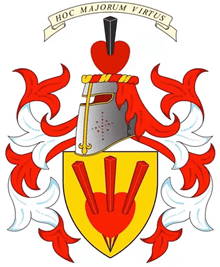
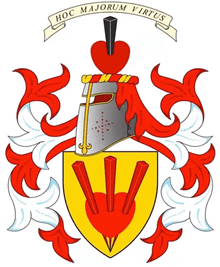
There are records of Logan’s rubbing some famous elbows[i]. From 1165 to 1214, Robertus De Logan appears frequently as a witness on royal land grants during the reign of William the Lyon. In 1298, Walter Logan received a land grant from Robert the Bruce. Perhaps the most famous is Sir Robert and Sir Walter Logan who were in the train of Barons bringing the heart of Robert the Bruce to the holy sepulcher. Unfortunately for them, they were slain in the attempt. It is believed that from this point forward, the Logan’s started using the coat of arms shown above the heart representing the heart pf Robert the Bruce.
In 1380 my 25th GGF who had the surname of Logan, gave rise to a new subgroup within haplogroup L21. It is possible, but probably unprovable that from this ancestor rose the line of the Barons of Restalrig (at the time known as Lestalric). Some refer to them as “Clan Chiefs”, but I have been told that clans were used only in the highlands so they actually are “Family Leaders”.
Given the potential to claim leadership in the Clan or Family, it is worth giving a very brief history of the “Lairds” or Baron’s of Restalrig. The first known Logan Baron of Restalrig was Sir Robert Logan, a distinguished knight who married the daughter of King Robert II. In 1400 Sir Robert became the admiral of Scotland representing the height of Logan influence. For the next 200 years Logans continued to inherit the title of Baron of Restalrig until Sir Robert Logan, the 7th baron got himself tied up into the Gowrie Conspiracy.
On 5 August 1600, King James VI of Scotland was (supposedly) the victim of an attempted kidnaping by John Ruthven, the 3rd Earl of Gowrie. During this attempted kidnapping, John Ruthven was slain. There was an investigation searching for motives and for all those who were responsible. Eventually our very own Sir Robert Logan was implicated using letters produced by a notary named Goerge Sprot. In the letter Robert supposedly offered Gowrie and his brother the use of his Castle to settle their plot. Though he had passed they dug him up, tried and convicted him of treason. As a result, in 1609 the lands and properties of the Logan family were forfeited by the Parliament of Scotland. The records include the text of the 5 letters in question. Questions remain about these letters with some saying that they were forged by Sprot, possibly under duress. These letters did not save Sprott who was executed 1608 for foreknowledge of the conspiracy.
As discussed above, it is not known exactly how we relate to these Barons, but it is very likely that we share a common ancestor (though maybe from 4000 years ago). Either way around 100 years later my 6th great grandfather David Logan was born. While we don’t know for sure exactly when or where he was born, we do know that he came to Philadelphia from Ireland. Given that he ended up in the Shenandoah Valley it is my guess that his ancestor went from Ayrshire to Ulster during the Ulster Plantations migration.
The Scotch-Irish
For much of my early life I assumed I was part Scotch-Irish simply because of my name, Sean being Irish and Logan Scottish. I have since learned that I was right, but for the wrong reason.
In the 1600s[ii], King James the VI of Scotland became King James the first of England. During his reign resurrected a failed settlement plan into Ulster Ireland. He capitalized on the fact that Queen Elizabeth had confiscated the lands after the Irish Rebellion. In addition, in Ulster, whole towns and villages had been destroyed[iii]. This “opportunity” became especially appealing to lowland Scots who were dealing with a new law around feudal obligations making rents unaffordable. As a result, between 1610 and 1630, over 20,000 Scottish living in Ayrshire moved to Ulster.
The settlers found land that was ripe for farming crops that were recently brought back from the “New World”. Potatoes for example, were quite popular, and were totally unknown to Europe before 1492. Once discovered the benefit was obvious as it would take 5 acres of grain to feed 1 family where the same plot of potatoes could feed 3[iv]. This opportunity also led to a dependency that would cause issues in the future.
Settling in Ulster was not necessarily peaceful as is shown by a 1611 government commissioned survey by Lord Carew showed. “The Earle of Abercorne Cheefe Undertaker in the precinte of Strabin in the Countie of Tyrone hath taken possession of his land” …. “his followers and tenants has since may last buylte 28 houses of fayre Coples and before may by his tenants who are all Scotishmen the number of 32 houses of like goodness. He is preparing the necessarie materials for buyldinge of a fayre Caste and a bawne …”[v] A Bawne (or Bawn) is a defensive wall surrounding an Irish tower house. This clearly shows the need for defense, against the “native” Irish who were not so pleased being pushed out of their land for these new settlers.
Tensions in Ulster continued to increase. In 1626 Charles 1was crowned king and immediately the entire Isles were thrown into religious upheaval[vi]. With the help of William Laud, the Archbishop of Canterbury he tried to force religious uniformity. Resistance led to crackdowns on those who resisted causing increased migration to America from Catholics and Puritans. In Ulster this came to a head with an Irish Catholic uprising resulting in the slaughter at Portadown, killing 100 protestants by forcing them off of a bridge into the River Bann (shooting any who tried to swim).
Irish Catholics were not the only ones to suffer religious persecution. The Scots who came to Ulster were proud Presbyterians. In 1560 the Scottish Parliament rejected the authority of the Pope[vii] resulting in the Presbyterian system being adopted by the Scottish Church and parliament[viii] 30 years later. During the reign of Charies II and James II Presbyterians did not escape the desire for religious uniformity with forced church closures. In May 1639, all Presbyterian residents in Ulster over 16, were required to take what was known as the “Black Oath”, binding them to unconditional obedience to all royal commands, civil or religious, just, or unjust. Many refused and were penalized. Furthermore, in 1704 Presbyterians were further marginalized when the Test Act came to Ireland which limited employment to members of the Anglican Church[ix].
In 1690, the Irish economy began a period of decline, primarily due to export restrictions levied by England. Disease and drought added to their misery, harming the Irish Potato crops in the 1720s[x]. Probably nothing can better demonstrate the frustration of those living in Ireland as Jonathan Swift’s satirical essay “A Modest Proposal”, where he suggests dealing with the current crisis by raising poor children as food. Obviously that horrible idea was never intended to be implemented, but it did shine a light on how dissatisfied those in the area were.
Many of these lowland Scots ended up leaving Ulster for the New World within a century of their arrival. These “Ulster Scots” are also known as Scotch-Irish. It just so happens that my 6th GGF, David Logan was one of those.
That wraps up a 234k year journey from Adam in Africa to David who is headed to the American Colonies. When I look at it this way, frankly, it complicates my view on my heritage. I am proud to be Scotch-Irish, among all others that will be explored in other books. However, my Scotch-Irish heritage was only in the British Isles for 1.7% of the time between now and Adam. So, what am I? Like all of you it just depends on what millennium I am looking at. It certainly has made me feel much closer to my fellow humans around the world.
Now it is time to look at our side of the brick wall. In part 2 we will explore the ancestors of his father Menifee (Fee) Logan, ending when he meets his wife, Peggy Gard. Peggy’s ancestry will be explored in Part 3.
Now join me as we discover how John Logan came to be.
[1] For a simple read on this topic I recommend Why do we have surnames? | English Heritage (english-heritage.org.uk)
[i] Research in this area completed by Jim Logan former administrator of the pre1800 Logan group. In fact much thanks is owed to him as he led the Logan DNA project and really helped us understand how we may related to other Logans.
[ii] This paragraph references data from “The Origins of Ulster Scots Emigration to America: A survey of Recent Research” by Kenneth W Keller
[iii] Annals of Augusta County VA by Joseph Addison Waddell Pg 2 (from the Plantation Papers)
[iv] American Colonies by Alan Taylor, chapter 4
[v] Plantations in Ulster, 1600-41 A collection of Documents – No. 5, pg 22
[vi] King Charles I – Historic UK (historic-uk.com)
[vii] History | The Church of Scotland
[viii] IBID
[ix] Test act | British History & Religious Discrimination | Britannica
[x] “A Modest Proposal” | Encyclopedia.com
Open Questions remaining in part 1:
This section is for those who would like to continue researching. I will include these open questions at the end of any chapter when open questions remain. I encourage anyone to help keep this book updated. Please do coordinate any updates with myself or a future “keeper of the histories”.
- What is our connection to the Logans of Restalrig?
- Are we correct that David Logan’s Ancestors were from Ayrshire and moved to Ulster in the early 1600s?
 Becoming Us